China Kimono Myth: Hanfu and Asian Robe Origins

The Search for the 'China Kimono': Untangling Asian Garment History
When global fashion enthusiasts search for a 'china kimono,' they are often navigating a complex web of cross-cultural terminology, historical misattributions, and Orientalist marketing. To be culturally and historically precise: there is no such garment as a 'China kimono.' The kimono is the national garment of Japan (collectively known as wafuku), while the traditional clothing of the Han Chinese is known as Hanfu. However, this common search query points to a fascinating reality: the deep, centuries-old sartorial dialogue between China and Japan, and the shared T-shaped construction that defines many East Asian robes.
Conflating Chinese and Japanese traditional dress erases their distinct cultural evolutions. Yet, examining the historical Silk Road exchanges that shaped both traditions reveals a rich tapestry of shared ancestry, regional substyles, and divergent tailoring philosophies. Whether you are a historian, a textile collector, or a modern wearer looking to source authentic garments, understanding the distinction between Chinese Hanfu, Japanese Wafuku, and regional crossovers is essential for cultural respect and accurate styling.
Tang Dynasty Paofu and the Birth of the Japanese Kosode
To understand why Western consumers often confuse Chinese and Japanese robes, we must look to the Tang Dynasty (618–907 CE). During this golden age of Chinese cosmopolitanism, diplomatic missions and Silk Road trade routes facilitated a massive transfer of culture, art, and textiles to the Japanese archipelago. According to the Metropolitan Museum of Art's Heilbrunn Timeline of Art History, Chinese silk weaving techniques, motifs, and garment structures profoundly influenced early Japanese court dress.
The ancestor of the modern Japanese kimono is the kosode (small sleeves). Originally worn as an undergarment by the Japanese aristocracy, the kosode evolved from the broader-sleeved Chinese paofu (long robes) and shenyi (deep robes) imported during the Nara and Heian periods. While Chinese robes historically emphasized flowing, floor-sweeping silhouettes with crossed collars (jiaoling youren), Japanese tailoring eventually adapted these T-shaped garments to suit local climates, aesthetic preferences, and the rigid, obi-tied silhouettes of the Edo period.
Structural Comparison: Hanfu vs. Kimono vs. Ryusou
While they may appear similar in flat, T-shaped pattern cutting, the construction, fastening, and wearing protocols of these garments are vastly different. The table below outlines the core structural variations across three major East Asian robe traditions.
| Garment Tradition | Primary Origin | Sleeve Style & Construction | Collar Type | Fastening Method |
|---|---|---|---|---|
| Hanfu (Paofu/Ruqun) | China | Curved or straight wide sleeves; often attached seamlessly or with minimal seaming. | Crossed collar, right lapel (jiaoling youren). | Internal ties and external silk sashes; no rigid belts. |
| Wafuku (Kimono) | Japan | Rectangular sleeves with a deep tamoto (sleeve pouch); straight drop-shoulder seams. | Crossed collar, right lapel; stiffened with a han-eri. | Secured by a rigid, heavily structured obi belt tied at the back. |
| Ryusou | Ryukyu (Okinawa) | Wide, open sleeves; lighter unlined construction for subtropical climates. | Crossed collar; often worn open at the chest to show under-layers. | Tied with a wide, soft sash at the front or side. |
Regional Crossovers: The Ryukyuan Ryusou
If there is a garment that genuinely bridges the gap between Chinese and Japanese sartorial traditions, it is the Ryusou of the Ryukyu Kingdom (modern-day Okinawa, Japan). As a vital maritime hub between Ming Dynasty China and Feudal Japan, the Ryukyu Islands developed a unique textile culture that synthesized both influences.
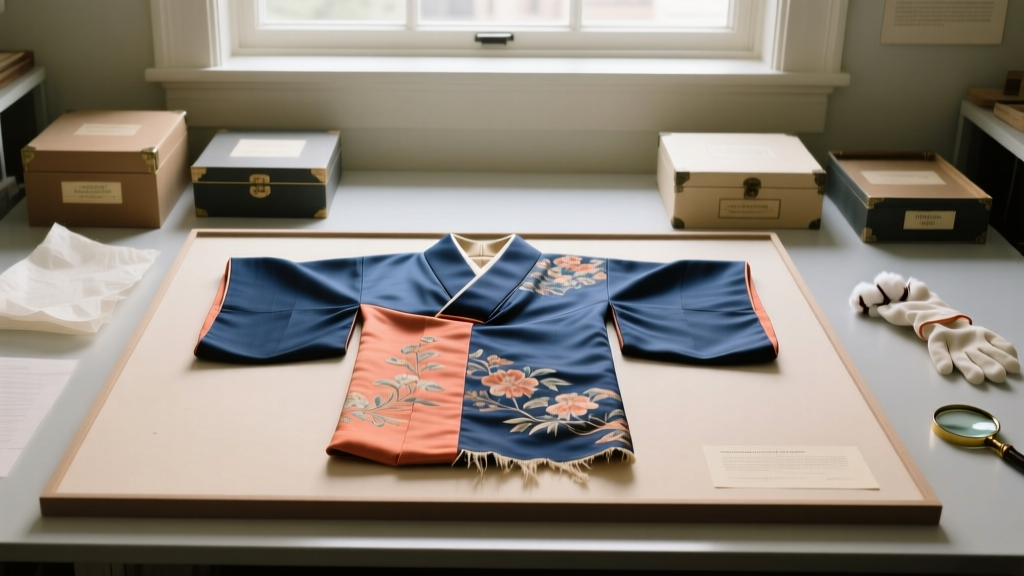
The Ryusou features the T-shaped silhouette and crossed collar reminiscent of Japanese wafuku, but its vibrant color palettes, dragon and cloud motifs, and court-ranking protocols were heavily dictated by Chinese tributary relationships. The most iconic substyle of Ryukyuan dress is the Bingata robe. Dyed using resist-dyeing techniques and pigments derived from local coral, turmeric, and indigo, Bingata textiles feature tropical motifs like hibiscus, banana leaves, and geometric waves. Today, authentic vintage Bingata robes are highly sought after by textile collectors, with museum-quality pieces preserved at institutions like the Okinawa Prefectural Museum & Art Museum.
Chinese Opera Robes (Xifu): The Theatrical Equivalent
Another reason the 'china kimono' search query persists is the visual impact of Chinese Opera robes, known as Xifu. In Peking Opera and Kunqu, actors wear highly stylized, T-shaped robes that feature the wide, dramatic sleeves often associated by Western audiences with kimonos. However, Xifu are not everyday historical garments; they are theatrical exaggerations of Ming and Qing Dynasty court and military dress.
The most famous of these is the Mangpao (Python Robe), worn by actors playing emperors or high-ranking officials. Unlike the Japanese kimono, which restricts movement to emphasize grace and stillness, the Mangpao is designed for kinetic performance. It features 'water sleeves' (shuixiu)—long extensions of white silk attached to the cuffs that actors manipulate to convey intense emotion. The Kyoto National Museum frequently highlights the contrast between these dynamic Chinese theatrical robes and the restrained, highly structured aesthetic of Japanese Edo-period kosode.
Fabric and Motif Protocols in Theatrical Robes
Understanding Xifu requires decoding its strict visual language, which differs entirely from Japanese kimono seasonal motifs:
- The Python (Mang): A four-clawed dragon motif reserved for high nobility and emperors in theatrical contexts.
- The Kao (Armor): A heavily embroidered, multi-layered robe with attached flags on the back, indicating a commanding general.
- The Xuezi: A simpler, crossed-collar robe with embroidered swallows or plum blossoms, worn by scholars or young women.
- Color Coding: Yellow is strictly for royalty; red denotes loyalty and high rank; black signifies impartiality and roughness; white indicates treachery or cunning.
Buying Guide: Sourcing Authentic Hanfu and Avoiding Fast-Fashion Traps
For modern consumers seeking to purchase traditional Asian garments, the market is unfortunately flooded with mass-produced, culturally inaccurate 'costumes' often mislabeled as 'Chinese kimonos' or 'Oriental robes.' To build an authentic, respectful wardrobe, buyers must know what to look for and what to avoid.
Identifying Authentic Hanfu
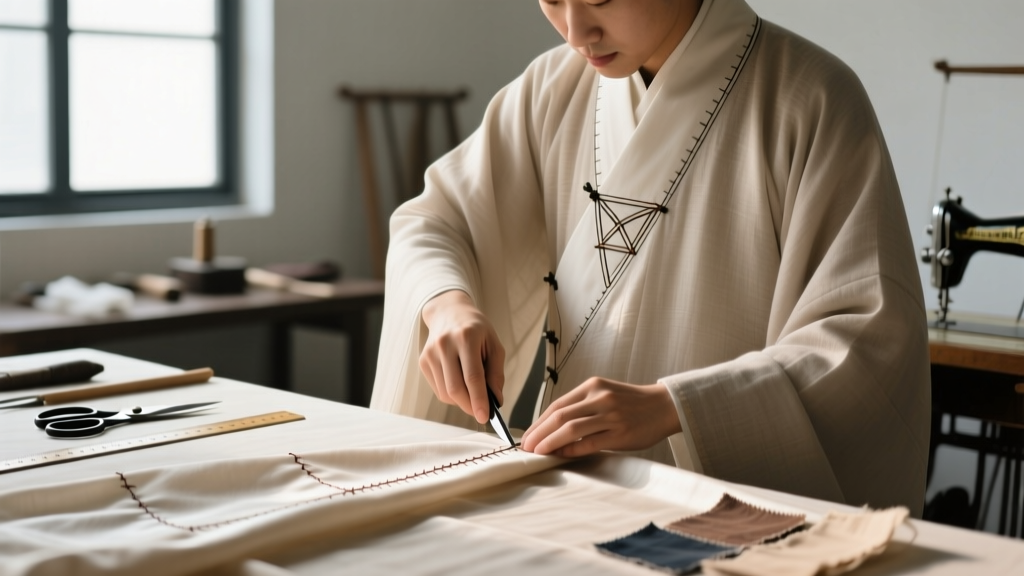
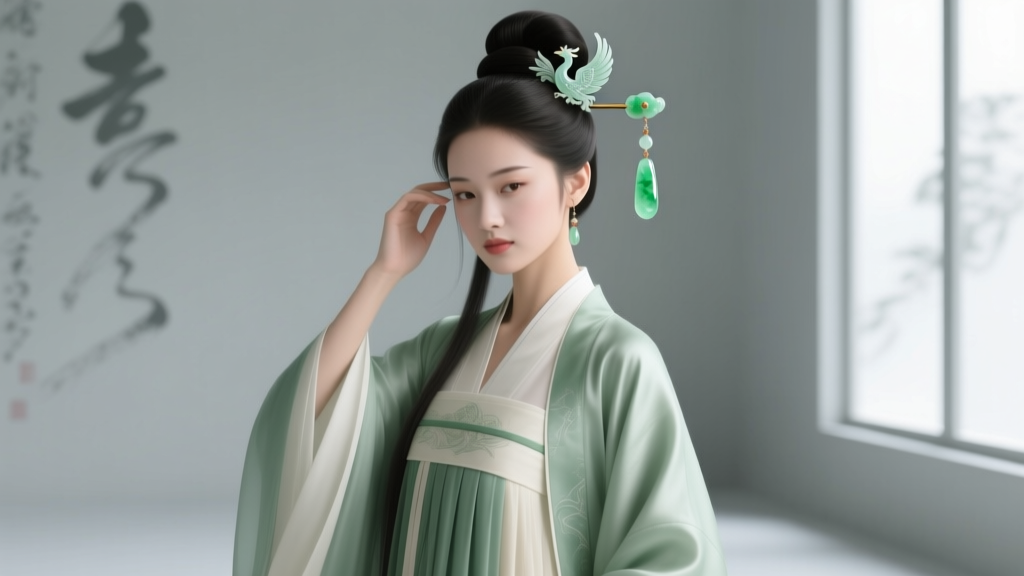
When shopping for Chinese traditional clothing, search specifically for Hanfu (Han clothing) or Qipao (the 1920s modernized dress), rather than 'China kimono.' Authentic Hanfu retailers prioritize historical accuracy in pattern cutting. Look for the jiaoling youren (right-over-left collar) rule—a left-over-right collar is strictly reserved for the deceased in Chinese culture and is a major red flag in manufacturing. Authentic modern Hanfu brands like Shisanyu or Minghuatang use high-grade jacquard weaves, genuine silk brocades, and proper internal tie systems.
Price Ranges and Sourcing
Understanding realistic price points helps separate authentic artisan work from fast-fashion polyester knockoffs:
- Entry-Level Hanfu (Polyester/Cotton Blends): $40 – $90 USD. Suitable for casual wear and festivals, but lacks historical drape.
- Mid-Tier Hanfu (Silk Blends/Jacquard): $120 – $350 USD. Features accurate historical patterns (like the Ming Dynasty Mamianqun pleated skirt) and proper tailoring.
- Authentic Japanese Kimono (Vintage/Recycled): $80 – $500 USD for pre-owned silk komon or tsukesage. New, bespoke silk kimono from artisans in Kyoto start at $2,500 and can exceed $15,000 USD.
- Authentic Ryusou/Bingata: $500 – $3,000+ USD. Due to the labor-intensive resist-dyeing process and limited number of Okinawan artisans, genuine Bingata is a premium investment textile.
Cultural Note: When wearing Hanfu or Kimono outside of their native cultural contexts, avoid mixing the undergarments, footwear, and tying methods. Pairing a Japanese obi with a Chinese Hanfu, or wearing Chinese theatrical boots with a Japanese yukata, creates a sartorial dissonance that disrespects the specific lineage of both garments.
Conclusion: Respecting the Distinct Lineages of Asian Dress
The search for a 'china kimono' ultimately leads to a profound appreciation for the diversity of Asian textile history. While the Silk Road and maritime trade routes ensured that China and Japan shared early T-shaped tailoring concepts, centuries of distinct cultural evolution resulted in entirely different garments. The flowing, tie-fastened elegance of Chinese Hanfu, the structured, obi-bound architecture of the Japanese Kimono, and the vibrant, subtropical synthesis of the Okinawan Ryusou each deserve to be recognized on their own terms. By abandoning conflated terminology and embracing the specific, native names of these garments, we honor the artisans, historians, and living practitioners who keep these magnificent traditions alive today.