Cheongsam Qipao Difference: A Historical & Tailoring Guide
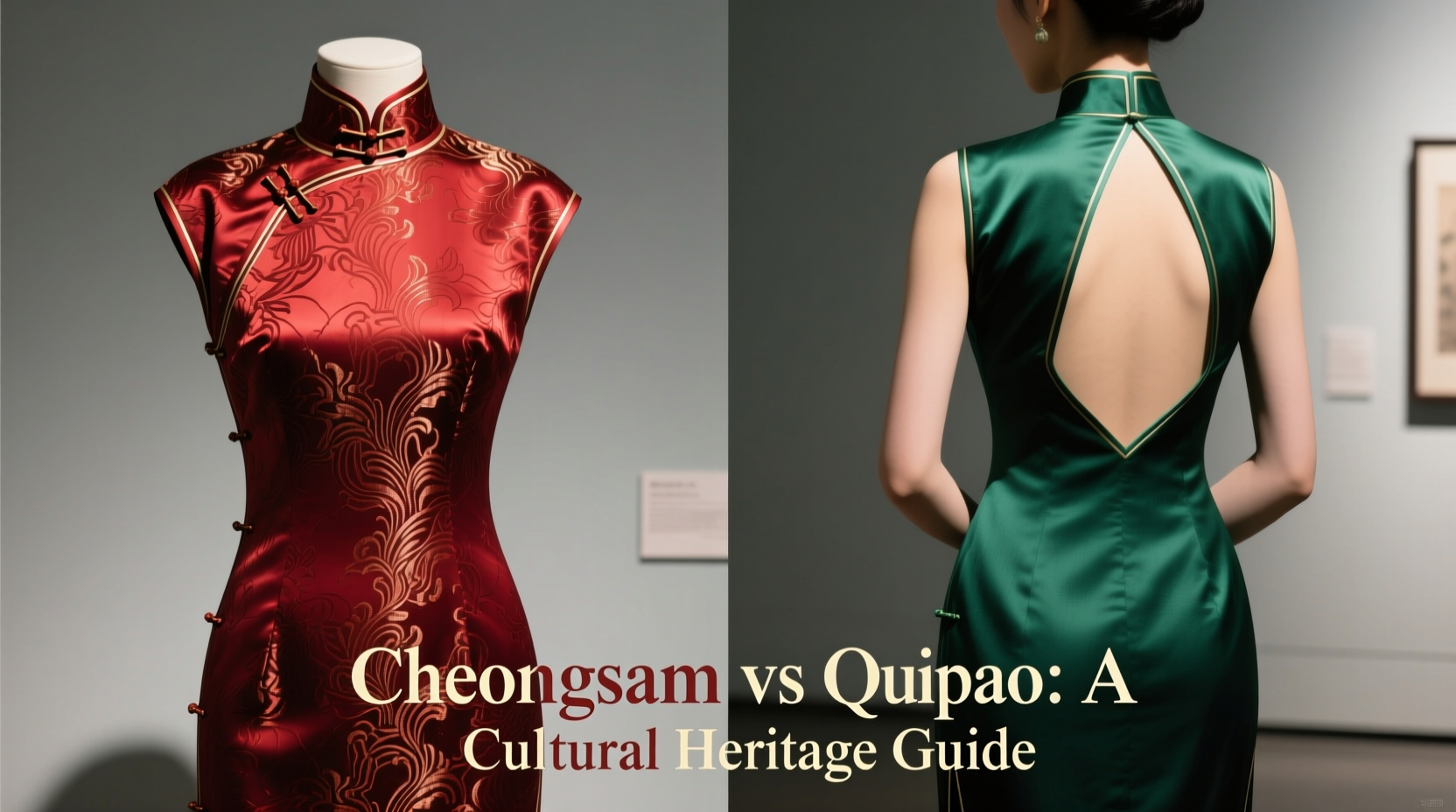
When discussing traditional Chinese clothing, the terms cheongsam and qipao are frequently used interchangeably by international audiences and modern retailers. However, to cultural historians, master tailors, and garment enthusiasts, the cheongsam qipao difference encompasses a rich tapestry of linguistic divergence, regional tailoring philosophies, and distinct historical evolutions. Understanding these nuances is essential for anyone looking to appreciate, collect, or wear this iconic garment with cultural accuracy and respect.
The Etymological Roots: Mandarin vs. Cantonese
The primary difference between the two terms originates from China’s diverse linguistic landscape and its complex colonial history. Qipao (旗袍) is the Mandarin Chinese term. The word translates literally to ‘banner gown,’ referencing the Manchus, who were organized into ‘banners’ (其, qi) during the Qing Dynasty (1644–1912). Originally, the qipao was a loose, A-line, floor-length robe worn by Manchu women over trousers, designed for modesty and ease of movement on horseback.
Cheongsam (長衫), on the other hand, is the Cantonese pronunciation of changshan, meaning ‘long shirt’ or ‘long gown.’ Historically, this term referred to the men’s long mandarin gown. However, as British colonists in Hong Kong interacted with Cantonese-speaking populations, ‘cheongsam’ was adopted into the English lexicon specifically to describe the women’s fitted dress. Therefore, while a historian in Beijing will use qipao to describe the garment’s entire historical lineage, a vintage collector in Hong Kong or a Western fashion archivist will likely use cheongsam.
A Timeline of Evolution: From Banner Gown to Modern Silhouette
The transformation of the qipao from a modest, voluminous banner gown into the figure-hugging cheongsam recognized today is one of the most fascinating trajectories in fashion history.
The 1920s Shanghai Revolution
The modern silhouette was born in the cosmopolitan hub of 1920s Shanghai. Influenced by the New Culture Movement and Western feminist ideals, young Chinese women began adopting elements of male dress to assert intellectual and social equality. Tailors in Shanghai introduced Western darting, set-in sleeves, and the high, stiff mandarin collar. According to the Metropolitan Museum of Art’s Heilbrunn Timeline of Art History, this era marked a pivotal shift where traditional flat-pattern cutting merged with Western three-dimensional tailoring, creating a garment that celebrated the natural female form while retaining distinctly Chinese aesthetic codes.
Post-War Hong Kong and Western Influence
Following 1949, the center of cheongsam innovation shifted to Hong Kong. In the 1950s and 60s, the garment became shorter, sleeveless, and featured higher side slits to accommodate the active, modern lifestyle of working women. This era popularized the use of vibrant, Western-imported textiles and geometric prints, cementing the ‘Hong Kong style’ cheongsam as a global symbol of mid-century oriental chic.
Regional Tailoring Schools: Jingpai, Haipai, and Gangpai
To truly grasp the cheongsam qipao difference in a practical sense, one must examine the three dominant regional tailoring schools. Each school dictates specific construction rules, fabric preferences, and silhouette proportions.
| Feature | Beijing Style (Jingpai) | Shanghai Style (Haipai) | Hong Kong Style (Gangpai) |
|---|---|---|---|
| Silhouette | Straight, modest, A-line or slight taper | Figure-hugging, tailored with bust/waist darts | Highly fitted, shorter hemline, higher slits |
| Collar & Sleeves | Lower collar, wider and longer sleeves | High stiff collar, varied sleeve lengths | Very high collar, often sleeveless or cap-sleeve |
| Ornamentation | Heavy embroidery, traditional motifs, elaborate pankou | Subtle piping, lace trims, art-deco influences | Minimalist piping, bold printed fabrics, Western zippers |
| Primary Era | 1910s – 1930s | 1930s – 1940s | 1950s – 1970s |
Anatomy of the Garment: Construction and Pankou Knots
Whether referred to as a cheongsam or a qipao, authentic garments share specific structural hallmarks that differentiate them from Western dresses or mass-produced costumes.
The Pankou (Frog Closures)
The pankou (盘扣) are the intricate knotted buttons that fasten the diagonal dajin (right-side opening). In haute couture qipao tailoring, these knots are not merely functional; they are symbolic. Master artisans craft them into shapes resembling plum blossoms, butterflies, or the Chinese character for longevity (寿). A high-quality bespoke qipao will feature entirely handmade, silk-wrapped pankou, whereas commercial versions rely on stiff, machine-made synthetic knots or hidden back zippers.
The Shuijin (Water Slits)
The side slits, or shuijin, were originally introduced to allow for ease of walking. In traditional Beijing-style qipao, the slit never extends above the knee. In contrast, the modern Hong Kong-style cheongsam may feature slits that reach the mid-thigh, though cultural protocols dictate that when standing still, the slit should not expose the upper thigh to maintain elegance and modesty.
Fabric Choices and Seasonal Variations
Authentic garments rely heavily on the drape and weight of the textile. The China National Silk Museum highlights the historical importance of regional silks. For summer, Xiangyunsha (gambiered Canton gauze) is the pinnacle of luxury—a silk dyed with river mud and yam juice that creates a cool, rustling, water-resistant fabric. For winter, heavy silk brocades (织金缎) lined with wool or cotton are utilized to provide warmth without sacrificing the sleek silhouette.
Sourcing and Pricing: Investing in Authentic Tailoring
If you are looking to acquire an authentic qipao or cheongsam, understanding the market tiers is crucial to avoid overpaying for fast-fashion imitations.
- Off-the-Rack / Mass Market ($40 – $120 USD): Typically made from polyester blends with printed ‘brocade’ patterns. These feature hidden back zippers and faux pankou. Suitable for casual wear or themed parties, but lacking in cultural authenticity and breathability.
- Boutique Ready-to-Wear ($250 – $800 USD): Found in specialized boutiques in Shanghai, Hong Kong, or diaspora hubs. These use genuine silk, crepe de chine, or linen, featuring functional handmade pankou and proper interior seam binding.
- Master Bespoke ($1,500 – $5,000+ USD): Commissioned from heritage tailors (such as those on Hong Kong’s Nathan Road or Shanghai’s Changle Road). This includes multiple fittings, flat-pattern cutting adapted to the wearer’s exact posture, and rare textiles like authentic Xiangyunsha. The Hong Kong Heritage Museum has extensively documented the legacy of these master tailors, noting that a single bespoke garment can take over 40 hours of hand-stitching.
Cultural Protocols and Modern Styling
Wearing a qipao or cheongsam today requires an understanding of its cultural weight. In mainland China, the qipao is largely reserved for formal occasions: weddings, tea ceremonies, diplomatic events, and the Lunar New Year. It is rarely worn as daily streetwear. Conversely, in Hong Kong and among the global diaspora, the cheongsam is sometimes adapted into shorter, more relaxed cuts for professional or semi-formal daily wear.
When styling the garment, avoid pairing it with overly casual footwear like sneakers unless intentionally aiming for a modern, avant-garde fusion look. Traditional pairing involves silk slippers or modest heels. Furthermore, respect the garment’s modesty: ensure the fit is tailored but not restrictive, and avoid altering the neckline or slit height in a way that reduces the garment to a caricature. By understanding the profound cheongsam qipao difference—from its Manchu banner roots to its Shanghai and Hong Kong tailoring revolutions—wearers can honor the living history woven into every silk thread and knotted closure.