The Cheongsam Purple: Regional Substyles, Dyes, and Styling

The Imperial to the Modern: Purple in the Cheongsam
To speak of the cheongsam purple is to invoke a color steeped in imperial authority, spiritual mysticism, and mid-century modern glamour. In traditional Chinese culture, purple (zǐ, 紫) occupies a rarefied space. Historically, it was the color of the North Star, the celestial pivot around which the heavens revolved. This cosmic association birthed the name for the imperial palace: the Purple Forbidden City (Zǐjìnchéng, 紫禁城). Yet, when the cheongsam (長衫) evolved from the voluminous robes of the Qing Dynasty into the tailored, body-conscious silhouette of the 20th century, purple transitioned from an exclusive imperial edict to a hallmark of the sophisticated, cosmopolitan woman.
Today, the purple cheongsam is not a monolith. It is a garment defined by distinct regional substyles, varying dyeing methodologies, and intricate construction techniques. Understanding these variations is essential for collectors, cultural enthusiasts, and those seeking a bespoke garment that honors the living heritage of Asian sartorial traditions.
Regional Substyles of the Purple Cheongsam
The evolution of the cheongsam splintered into distinct regional schools (pài, 派) during the 1930s through the 1960s. The interpretation of a purple cheongsam shifts dramatically depending on whether it was tailored in Shanghai, Hong Kong, Beijing, or the Nanyang (Southeast Asian) diaspora.
| Regional Substyle | Silhouette & Cut | Typical Purple Shade | Preferred Fabric | Era of Peak Influence |
|---|---|---|---|---|
| Haipai (Shanghai) | Fluid, bias-cut, high collars, 2D flat pattern draping. | Deep Amethyst, Muted Mauve | Silk crepe de chine, lightweight velvet. | 1920s – 1940s |
| Gongpai (Hong Kong) | Structured, 3D tailoring with four-sided darts (sìmiàn shěng). | Vibrant Magenta-Purple, Royal Purple | Stiff silk brocade, jacquard. | 1950s – 1970s |
| Jingpai (Beijing) | Conservative, straighter lines, lower collars, wider hems. | Aubergine, Deep Plum | Heavy Zhang velvet, silk satin. | 1930s – 1950s |
| Nanyang (Singapore/Malaysia) | Breathable, shorter sleeves, relaxed fit, Nyonya crossover. | Pastel Lilac, Wisteria | Cotton, linen, georgette. | 1960s – Present |
Haipai: The Shanghai Silhouette
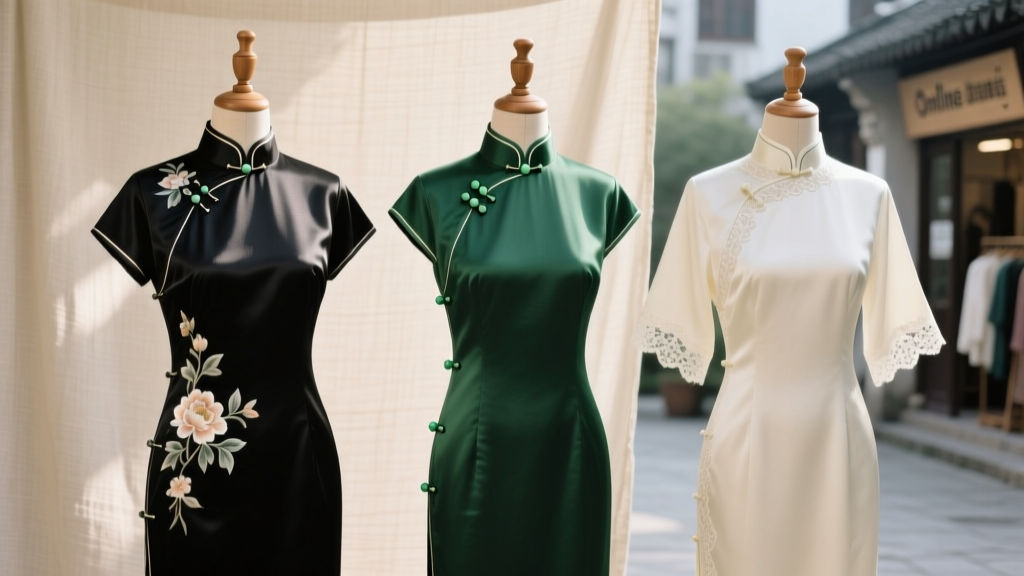
The Haipai (海派) or Shanghai-style cheongsam is the genesis of the modern qipao. In the 1930s, Shanghai calendar posters frequently depicted the 'Modern Woman' draped in a fluid, bias-cut purple silk crepe cheongsam. The Haipai relies on a flat, two-dimensional cutting technique that utilizes the natural drape of the fabric and the bias grain to contour the body without aggressive darting. A purple Haipai cheongsam often features subtle, tone-on-tone floral embroidery and elongated pan-kou (盤扣) frog fasteners that trace the dajin (大襟) lapel in sweeping, lyrical curves.
Gongpai: The Hong Kong Tailoring Revolution
As political shifts moved tailoring masters south to Hong Kong in the 1950s, the Gongpai (港派) style emerged. Influenced by Western Dior silhouettes, Hong Kong tailors introduced three-dimensional cutting, specifically the four-sided dart, to create a pronounced hourglass shape. According to the archives at the Hong Kong Heritage Museum, the Gongpai cheongsam favored stiffer brocades that held their structure. A purple Gongpai cheongsam from this era is typically a vibrant, unapologetic magenta-purple, heavily structured, and designed for formal banquets and weddings.
The Art of the Hue: Traditional and Modern Dyeing
The depth of a purple cheongsam is intrinsically linked to the dyer's vat. Before the proliferation of synthetic aniline dyes in the late 19th century, achieving a true purple in East Asian textiles was a complex botanical endeavor.
Zǐcǎo and the Botanical Purple
Historically, the most revered source of purple dye in China and Japan was Zǐcǎo (紫草), known botanically as Lithospermum erythrorhizon or purple gromwell. The roots of this plant contain shikonin, a naphthoquinone pigment. As documented by textile conservators at the Victoria and Albert Museum, extracting purple from gromwell requires meticulous temperature control and specific mordants. By using an alum mordant, dyers achieve a bright, reddish-purple; by shifting to an iron mordant, the hue deepens into a melancholic, greyish aubergine. A cheongsam dyed with natural Zǐcǎo possesses a living, multi-dimensional luster that synthetic dyes cannot replicate, though it is highly photosensitive and requires careful preservation.
Contemporary Silk Dyeing
Modern bespoke tailors utilize acid dyes for silk, which allow for the creation of hyper-vibrant 'electric' purples and deep, colorfast plums. However, high-end artisan cooperatives are currently experiencing a renaissance in natural dyeing, offering clients the option of botanical purple dyes paired with traditional resist-dyeing (jiaxie) techniques to create bespoke, patterned purple silks.
A Buyer’s Guide to the Purple Cheongsam in 2026
Navigating the market for a purple cheongsam requires an understanding of garment construction, fabric provenance, and tailoring tiers. Whether you are purchasing for a wedding, a cultural gala, or everyday elegance, here is a practical framework for acquiring a high-quality garment.
Price Tiers and Construction Quality
- Off-the-Rack / Mass Market ($50 - $150 USD): Typically constructed from polyester blends with synthetic purple dyes. These garments lack the internal taping and hand-rolled hems of traditional tailoring. The purple hues are often flat and prone to a synthetic sheen.
- Made-to-Measure Boutique ($300 - $800 USD): Offers a mid-tier experience where clients select from pre-existing paper patterns adjusted to their measurements. Fabrics are usually genuine silk crepe or digital-print silk. Look for hand-sewn pan-kou knots and properly finished inner seams.
- Bespoke Master Tailor ($1,500 - $5,000+ USD): The pinnacle of the craft. A bespoke purple cheongsam involves a unique paper pattern drafted from scratch, multiple muslin fittings, and hand-stitched hems invisible from the exterior. Master tailors will source specific natural-dyed silks or vintage Zhang velvets, and hand-carve custom frog closures from silk-wrapped copper wire.
Styling Purple for Skin Undertones
Purple is uniquely versatile, but selecting the correct sub-shade is critical for harmonizing with the wearer's complexion:
- Cool Undertones: Opt for jewel-toned amethysts, royal purples, and blue-based lilacs. These shades complement the silver and platinum jewelry traditionally paired with modern Haipai styling.
- Warm Undertones: Seek out reddish-purples, deep magentas, and warm plums. These hues glow when accented with antique gold or Hetian jade accessories, echoing the opulent Gongpai aesthetic.
Preservation and Garment Care
The longevity of a purple cheongsam depends heavily on its dye origin and fabric composition. Natural purple dyes, particularly those derived from gromwell or logwood, are notoriously fugitive, meaning they fade rapidly when exposed to ultraviolet light.
If you own a naturally dyed purple silk cheongsam, it must be stored in a breathable, acid-free cotton garment bag, completely shielded from sunlight. Cleaning should only be undertaken by a specialist textile conservator or a dry cleaner experienced with heritage Asian garments, as standard chemical solvents can strip the delicate shikonin pigments. For synthetic or acid-dyed silk cheongsams, professional wet-cleaning is generally safe, but the garment should never be wrung or tumble-dried, as this destroys the structural integrity of the bias cut and crushes the silk fibers.
Conclusion: A Living Canvas
The cheongsam purple is far more than a seasonal color trend; it is a textile narrative that bridges the celestial mysticism of ancient dynasties with the sharp, cosmopolitan tailoring of the modern era. By understanding the regional distinctions between the fluid Haipai and the structured Gongpai, and by appreciating the botanical science of traditional dyes, wearers and collectors can engage with the cheongsam not merely as a garment, but as a profound artifact of Asian cultural heritage. For further study on the evolution of Chinese dress and textile conservation, the Royal Ontario Museum's Chinese Textile Collection remains an invaluable academic resource.