Cheongsam Mini Dress Buying Guide: Where to Shop in 2026
The Neo-Chinese Renaissance: Embracing the Cheongsam Mini Dress
The cheongsam mini dress represents a fascinating intersection of historical reverence and contemporary sartorial freedom. Originally rooted in the sweeping, ankle-length banner robes of the Manchu people, the qipao (cheongsam) was radically modernized in 1920s Shanghai. Today, the mini dress variation has become a staple of the Xin Zhongshi (Neo-Chinese) fashion movement, offering a silhouette that is both culturally resonant and highly wearable for modern social events, cocktail parties, and festive celebrations. As we navigate the fashion landscape in 2026, purchasing a cheongsam mini dress requires an understanding of traditional construction, fabric integrity, and cultural etiquette to avoid the pitfalls of fast-fashion caricatures.
From 1920s Shanghai to the Modern Hemline
To buy a cheongsam mini dress with an informed eye, one must understand its lineage. The modern qipao was born in the 1920s and 30s, championed by Shanghai's elite and intellectuals as a symbol of modern femininity and gender equality. According to the Victoria and Albert Museum's extensive archives on the qipao, the garment's silhouette shifted dramatically over the decades. While the 1930s favored floor-length hems with high slits, the 1960s introduced the radical 'mini' hemline, heavily popularized by Nancy Kwan in the film The World of Suzie Wong. This mid-century adaptation proved that the structural elements of the cheongsam—the Mandarin collar, the asymmetrical opening, and the side slits—could be preserved even when the hemline was raised above the knee.
Anatomy of a Quality Cheongsam Mini: What to Inspect
When shopping for a cheongsam mini dress, the structural integrity of the garment is paramount. Because the hemline is shortened, the balance of the garment's upper construction must be flawless to ensure modesty and comfort.
The Mandarin Collar (Qiling) and Pankou Fasteners
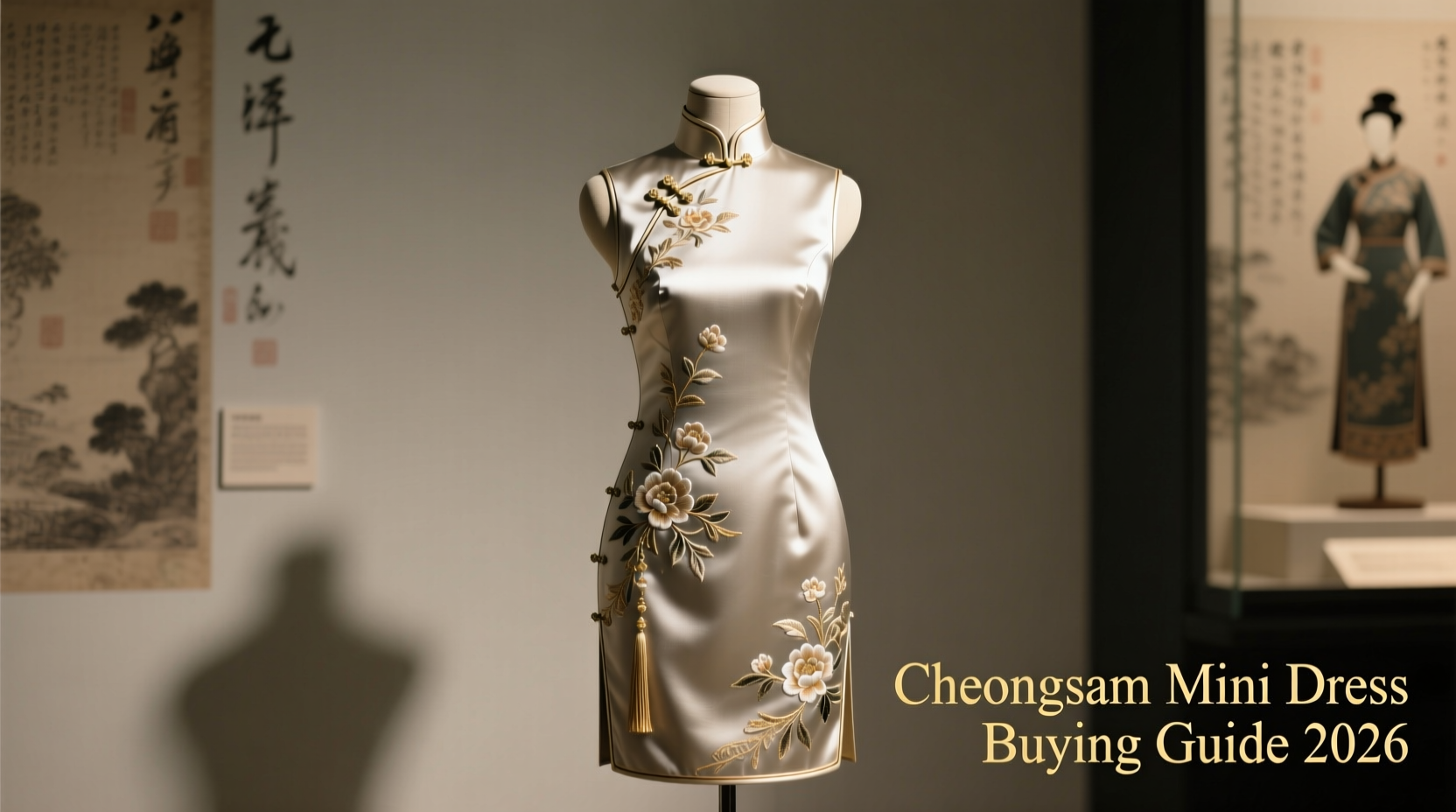
The collar should be stiffened with high-quality interfacing, standing between 3 to 5 centimeters high. A flimsy collar that collapses against the neck is a hallmark of poor manufacturing. The pankou (frog fasteners) should ideally be hand-knotted from the same silk or brocade as the dress. In haute couture and bespoke tailoring, these knots are stuffed with fine cotton or copper wire to maintain their three-dimensional shape. Machine-stamped, hollow pankou buttons are a red flag for mass-produced garments.
Darting vs. Traditional Flat Cutting
Historically, the qipao was cut flat from a single piece of fabric, relying on the side slits (kaicha) for movement and draping naturally over the body's curves. However, to achieve the skin-tight, body-con silhouette often demanded by modern mini dress buyers, contemporary tailors employ Western-style bust and waist darts. When trying on a mini cheongsam, ensure that these darts do not pull the fabric taut across the chest or hips, which can distort the delicate pankou closures and cause the side slits to flare open awkwardly.
Fabric Composition: Selecting the Right Textile
The drape and longevity of your cheongsam mini dress depend entirely on the textile. The China National Silk Museum highlights the immense diversity of Chinese silk weaving, which directly impacts how a mini dress behaves in motion.
- Silk Brocade (Zhuanghua / Song Brocade): Heavy, structured, and richly patterned with metallic threads. Ideal for winter weddings or formal evening events. It holds the mini silhouette rigidly, preventing the skirt from riding up.
- Xiangyunsha (Mud Silk): A highly prized, heritage fabric from Guangdong, dyed with yam juice and river mud. It has a crisp, papery drape and a subtle, dark sheen. An excellent, breathable choice for summer cocktail events.
- Crepe de Chine & Stretch Satin: Modern favorites for the mini dress. They offer a fluid drape and necessary stretch for the shortened hemline, allowing for ease of movement without compromising the tailored fit.
- Guipure Lace: Frequently used in contemporary fusion designs, often layered over a silk charmeuse slip. This bridges Western evening wear with Eastern structural motifs.
Price Tiers: What Should You Expect to Pay?
The market for the cheongsam mini dress is highly stratified. Below is a 2026 buying framework to help you budget according to your needs, whether you are seeking a one-off party piece or a lifelong investment garment.
| Tier | Price Range (USD) | Construction & Materials | Best For |
|---|---|---|---|
| Fast Fashion / E-Commerce | $40 - $120 | Polyester blends, machine-made hollow pankou, printed (not woven) patterns, overlocked inner seams. | Costume parties, casual themed events, single-use wear. |
| Mid-Tier Contemporary Brands | $180 - $450 | Silk blends or mid-grade mulberry silk, functional hand-tied pankou, proper lining, French seams. | Cocktail parties, New Year celebrations, modern bridesmaids. |
| Bespoke / Master Tailors | $800 - $3,000+ | Heritage silks (Xiangyunsha, Song brocade), custom-molded collars, hand-rolled hems, intricate embroidery. | High-fashion events, luxury weddings, cultural heritage preservation. |
Where to Shop: Top Destinations and Boutiques
Finding an authentic, well-constructed cheongsam mini dress requires looking beyond standard mall retailers. Here is where to source the best garments in 2026.
In-Person: The Tailoring Hubs of Shanghai and Hong Kong
If you have the opportunity to travel, bespoke tailoring remains the gold standard. In Shanghai, the South Bund Soft Spinning Material Market offers a chaotic but rewarding bespoke experience. You can select your own silk brocade and have a master tailor draft a custom mini qipao pattern for you in under a week. For a more curated, luxury experience, boutiques in Shanghai's former French Concession, such as Hanart or Blancore, offer contemporary, minimalist takes on the mini cheongsam that appeal to modern luxury consumers.
In Hong Kong, Shanghai Tang remains a recognizable heritage brand, though their modern collections frequently feature elevated, ready-to-wear mini dresses that blend traditional knot-work with 1960s mod silhouettes.
Online: Artisan Cooperatives and Neo-Chinese Labels
For international buyers, the digital landscape has matured significantly. Look for brands that explicitly detail their supply chain and fabric origins. Ms MIN, a high-end Chinese fashion label, frequently releases neo-Chinese capsule collections featuring structurally innovative mini dresses that respect traditional motifs while pushing avant-garde boundaries. On platforms like Etsy, seek out independent makers based in Hangzhou or Suzhou who specialize in pankou knot-making and offer made-to-measure services using genuine mulberry silk. Always request a video call to inspect the fabric's drape and the tailor's workshop before committing to a bespoke commission.
Styling and Cultural Etiquette for the Mini Qipao
Wearing a cheongsam mini dress carries a responsibility to honor the garment's cultural weight. The shortened hemline inherently draws attention to the legs, so balancing the outfit's proportions is key to maintaining elegance.
- Footwear: Avoid overly strappy or aggressive stilettos, which can skew the look toward fetishized caricatures. Opt for classic Mary Janes, velvet block heels, or embroidered flats to ground the outfit in sophisticated elegance.
- Modesty and the Slit: The side slits (kaicha) on a mini dress can easily over-expose the wearer when sitting. Ensure the slit begins no higher than mid-thigh. Many high-end tailors will sew a discreet silk gusset or inner modesty panel into the slit of a mini dress to prevent accidental exposure while preserving the illusion of the open cut.
- Jewelry: The Mandarin collar frames the face beautifully, rendering necklaces redundant and often clunky. Instead, draw inspiration from the Metropolitan Museum of Art's Costume Institute archives, which showcase historical figures pairing high-collared qipaos with statement jade earrings, pearl drops, or intricate hair ornaments.
Final Thoughts on Your Purchase
The cheongsam mini dress is not merely a trend; it is a living, breathing evolution of Chinese sartorial history. By prioritizing natural fibers, demanding structural integrity in the collar and fasteners, and purchasing from artisans or transparent contemporary brands, you invest in a garment that bridges the glamour of 1930s Shanghai with the dynamic, globalized fashion landscape of 2026. Approach your purchase with an eye for craftsmanship, and the result will be a piece of wearable art that commands respect and exudes timeless elegance.