Cheongsam Costume to Authentic Qipao: 2026 Buying Guide

When global shoppers search for a cheongsam costume, they are frequently met with a sea of mass-produced, hyper-sexualized polyester garments that bear little resemblance to the rich sartorial history of China. As we move through 2026, there is a growing and vital movement among diaspora communities, historians, and global fashion enthusiasts to reclaim this iconic silhouette from the Halloween bin and elevate it to its rightful place as a masterpiece of 20th-century tailoring. Whether you are attending a Lunar New Year banquet, a traditional wedding, or simply wish to integrate heritage garments into your modern wardrobe, understanding the distinction between a novelty 'costume' and an authentic qipao is the first step toward culturally respectful and sartorially elegant purchasing.
Decoding the Terminology: Qipao, Cheongsam, and the 'Costume' Trap
To shop intelligently, one must first understand the vocabulary. The term qipao (旗袍) is Mandarin, translating roughly to 'banner robe,' referencing the Manchu origins of the garment during the Qing Dynasty. Conversely, cheongsam (长衫) is the Cantonese pronunciation meaning 'long shirt,' a term popularized in Hong Kong and by Western tailors in the mid-20th century. Both terms refer to the same lineage of clothing, but the word 'costume' implies a caricature. A true qipao is a living, breathing garment of cultural significance, not a temporary disguise. By shifting your search parameters from 'cheongsam costume' to 'bespoke qipao' or 'heritage cheongsam,' you will immediately filter out fast-fashion caricatures and uncover artisan-made pieces that honor Chinese textile traditions.
The Anatomy of Authentic Construction
The difference between a $40 novelty outfit and a $1,200 heritage garment lies entirely in the micro-details of its construction. Authentic qipao making is an intangible cultural heritage in China, requiring years of apprenticeship to master. When evaluating a garment, look for the following structural hallmarks:
The Pankou (Frog Fasteners)
On a mass-market costume, the decorative knots along the collar and side slits are often machine-stamped plastic or glued-on polyester braids. On an authentic qipao, the pankou (盘扣) are meticulously handcrafted. Artisans use a technique involving a copper wire core wrapped tightly in silk thread, allowing the knots to hold their intricate shapes—such as plum blossoms, swallows, or ruyi clouds—without collapsing. A single complex pankou knot can take an artisan over four hours to complete.
The Ren (Lapel) and Collar Architecture
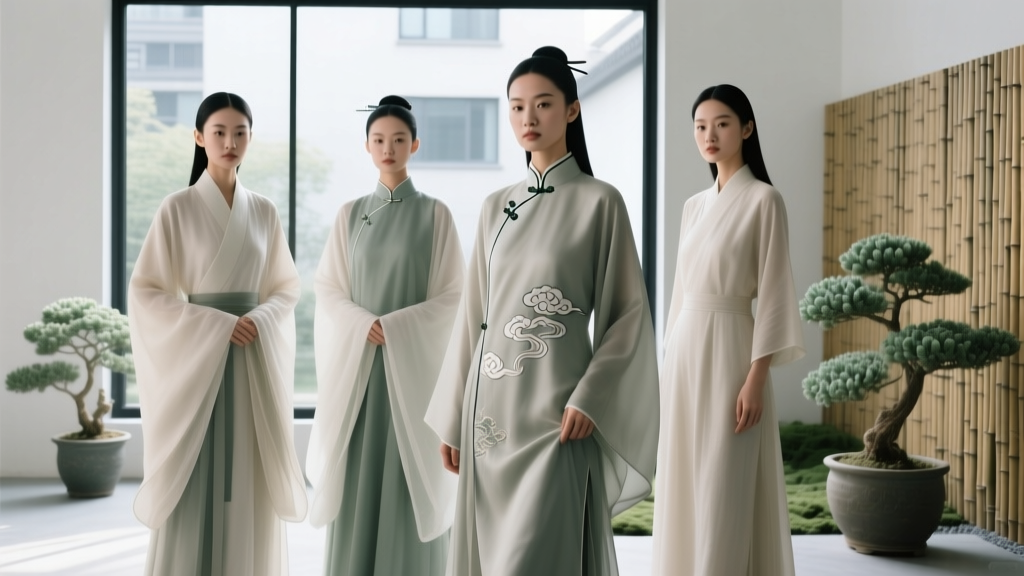
The collar of a true qipao is heavily interfaced and hand-stitched to stand upright, framing the jawline without choking the wearer. The transition from the collar to the ren (the diagonal or curved lapel closure) should feature a seamless shuiwaling (water wave) edge piping. According to archival textile data preserved by the China National Silk Museum, the precision of this piping was historically used to judge the skill of a Shanghai tailor, with the finest garments featuring piping so thin it resembled a single thread of silk.
Bias Cutting and the Silhouette
While early 1920s qipao were cut straight and loose, the iconic form-fitting silhouette of the 1930s was achieved through Western-influenced bias cutting and the introduction of darts. An authentic modern qipao utilizes a complex system of hidden darts and bias-cut silk that molds to the body's natural movements, allowing the wearer to sit, walk, and breathe comfortably—a feat impossible with the rigid, unyielding polyester brocades used in cheap costumes.
2026 Sourcing Matrix: Where to Shop
Finding the right garment requires knowing where to look based on your budget and intended use. Below is a comprehensive guide to sourcing authentic qipao in today's market.
| Tier | Price Range (USD) | Construction & Materials | Best For |
|---|---|---|---|
| Mass-Market 'Costume' | $30 - $80 | Polyester brocade, machine-printed, glued pannkou, no lining. | Theatrical props, single-use events (Not recommended for cultural events). |
| Ready-to-Wear Heritage | $150 - $450 | Silk blends or mid-grade mulberry silk, machine-sewn seams, handmade knots, silk lining. | Lunar New Year, weddings, formal dinners. |
| Bespoke / Couture | $800 - $3,500+ | Pure heavy crepe silk or Xiangyunsha, bias-cut, fully hand-stitched seams, custom wire-core knots. | Heirlooms, high-fashion, brides, collectors. |
Heritage Brands and Artisan Cooperatives
For ready-to-wear heritage pieces, brands like MS CHEUNG and YIYANG offer historically accurate silhouettes with modern sizing. For bespoke commissions, the gold standard remains the historic tailors of Hong Kong and Shanghai. In Hong Kong, establishments like Linva Tailor (established in 1936) continue to hand-cut garments using traditional Cantonese methods. In Shanghai, the South Bund Fabric Market houses master tailors who can replicate 1930s Haipai (Shanghai-style) silhouettes if you provide them with high-grade silk and historical reference photos.
Regional Variations: Shanghai vs. Beijing vs. Canton
The qipao is not a monolith; its design shifts dramatically depending on its regional origin. Understanding these variations will help you select a garment that aligns with your personal aesthetic and the formality of your occasion.
- Haipai (Shanghai Style): Born in the cosmopolitan hub of 1930s Shanghai, this style is characterized by its form-fitting silhouette, high side slits, and the integration of Western tailoring techniques like darts and set-in sleeves. It often features art-deco inspired geometric prints or delicate floral embroidery. As documented in the Metropolitan Museum of Art's Costume Institute archives, the Shanghai qipao was the ultimate symbol of the modern, liberated Chinese woman of the Republican era.
- Jingpai (Beijing Style): The Beijing variation leans heavily into imperial Manchu traditions. It is typically cut looser, featuring an A-line or straight silhouette that does not cling to the body. Jingpai garments are renowned for their opulent, heavy embroidery—often featuring dragons, phoenixes, or peonies—and are the preferred choice for traditional brides and highly formal state occasions.
- Cantonese Style: Practicality defines the Cantonese cheongsam. Often featuring longer lengths, lower slits, and more modest collars, this style was adapted for the humid climate and active lifestyles of women in Guangdong and Hong Kong. It frequently utilizes breathable fabrics like cotton-linen blends or lightweight silk gauze.
Vintage and Archival Sourcing
For the discerning collector, the secondary vintage market offers unparalleled access to mid-century masterpieces. The 1950s and 60s Hong Kong cheongsams, often made from imported European lace or heavily beaded silk chiffon, are highly sought after. When shopping on platforms like 1stDibs or specialized vintage dealers in Taipei and Singapore, always request detailed photographs of the inner lining and the pankou knots. Authentic vintage pieces will show slight, natural oxidation on the silk threads and hand-finished inner seams. Be wary of 'vintage-style' reproductions that use artificial distressing or synthetic velvets, which were not prevalent in high-end mid-century Chinese tailoring. The Shanghai Museum frequently hosts textile exhibitions that serve as excellent visual references for authenticating vintage 1930s and 40s pieces.
Fitting Protocols and Cultural Etiquette
The most common mistake buyers make when transitioning from a 'costume' mindset to an authentic garment is misunderstanding the fit. A true qipao should feel like a second skin, but it should never restrict your breathing or pull aggressively at the seams. The side slits are engineered to open only when walking or sitting; they should not gape open when you are standing still. Furthermore, cultural etiquette dictates how the garment is styled. Pair your qipao with modest, elegant accessories—jade bangles, pearl drop earrings, or a structured silk clutch. Avoid pairing heritage garments with overly theatrical makeup or novelty props, which inadvertently reduces the dress back to the 'costume' trope you are trying to avoid. By investing in authentic construction, respecting the regional history, and wearing the garment with dignified grace, you participate in the preservation and celebration of one of Asia's most enduring sartorial legacies.