Men Cheongsam & Changshan: Care Guide

Decoding the Terminology: Cheongsam, Changshan, and Tangzhuang
When Western consumers and vintage collectors search for a "men's cheongsam" or "cheongsam for men," they are often navigating a complex linguistic and historical crossover. In early 20th-century Cantonese, cheongsam (长衫) simply translated to "long shirt" or "long gown" and was worn by both sexes. However, in modern sartorial contexts, the term "cheongsam" (or qipao in Mandarin) is almost exclusively associated with women's form-fitting dresses.
To properly care for traditional Chinese menswear, we must first identify the correct garments you likely own or wish to maintain:
- Changshan (长衫): The traditional men's long gown, featuring a mandarin collar, side slits, and an asymmetrical front closure. Often worn as formalwear or by scholars.
- Tangzhuang (唐装): The "Tang suit" jacket. A shorter, hip-length jacket with a mandarin collar and knotted buttons, heavily popularized in the late 1990s and early 2000s as festive and diplomatic menswear.
- Magua (马褂): A riding jacket worn over the changshan, historically signifying status and formality.
Whether you possess a bespoke silk changshan from a heritage tailor on Shanghai's Maoming Road (which can cost between $400 and $1,500 USD) or an off-the-rack festive tangzhuang ($50 to $200 USD), the maintenance protocols for these garments require a deep understanding of Asian textile conservation. According to the Shanghai Museum's textile conservation archives, the intersection of structural tailoring and delicate natural fibers makes traditional Chinese menswear highly susceptible to improper laundering and storage damage.
Fabric Profiles and Washing Protocols
The care of your garment is entirely dictated by its textile composition and regional dyeing techniques. Unlike Western suiting, which relies heavily on wool and canvas interlinings, traditional Chinese menswear relies on the natural drape, weave, and surface treatment of the fabric.
Xiangyunsha (Gambiered Silk)
Originating from the Pearl River Delta in Guangdong, Xiangyunsha (香云纱) is a luxury summer fabric favored for high-end changshan. It is created by dyeing mulberry silk with the tannin-rich juice of the shulang (薯莨) yam, then coating it with iron-rich river mud and baking it in the sun. This creates a distinctive two-toned, slightly crisp fabric that is naturally antibacterial and sweat-wicking. Care Rule: Never use alkaline detergents or machine wash Xiangyunsha. The mud-coating is pH-sensitive. Hand-wash gently in cool water (below 30°C) using a neutral silk wash, and dry exclusively in the shade to prevent the tannins from UV-degrading.
Silk Brocade (Zhuanghua) and Wool Blends
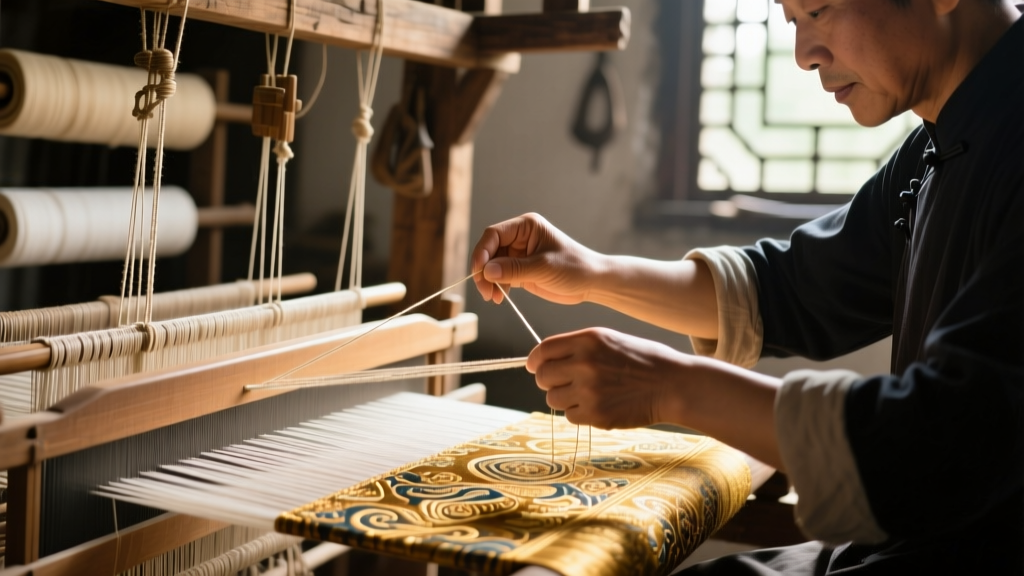
Winter tangzhuang and formal changshan are frequently crafted from Zhuanghua (silk brocade) or modern silk-wool blends. These fabrics feature raised, intricate jacquard patterns (such as dragons, plum blossoms, or auspicious clouds). The structural integrity of the brocade is easily destroyed by water agitation, which can cause the metallic or silk threads to pucker. Care Rule: Dry clean only. Seek out a cleaner experienced in handling Asian heritage garments, as standard perc (perchloroethylene) dry cleaning can sometimes strip the natural sericin from silk, leaving it brittle.
Summer Linens and Cottons
Everyday tangzhuang are often made from linen-cotton blends. While more forgiving, these fabrics are prone to severe shrinkage and wrinkling. Care Rule: Hand-wash or use a delicate machine cycle in a mesh bag. Remove immediately while damp and press with a steam iron to maintain the crispness of the front panels.
The Maintenance Matrix: Washing and Drying
Use the following matrix to determine the safest cleaning methodology for your specific garment type.
| Garment Type | Primary Fabric | Cleaning Method | Drying Protocol | Ironing Temperature |
|---|---|---|---|---|
| Summer Changshan | Xiangyunsha / Raw Silk | Hand-wash cold, neutral pH | Hang dry in shade | Low (110°C) with press cloth |
| Winter Tangzhuang | Silk Brocade / Wool | Professional Dry Clean Only | Flat dry / Air out | Steam only, no direct contact |
| Everyday Jacket | Linen / Cotton Blend | Delicate machine or hand | Hang dry, smooth seams | Medium-High with steam |
| Formal Magua | Heavy Satin / Velvet | Spot clean / Dry clean | Padded hanger, air dry | Steam from inside out |
Preserving Structural Elements: Liling and Pankou
The defining characteristics of traditional Chinese menswear are the liling (mandarin/stand collar) and the pankou (knotted frog buttons). These elements require specialized attention during both cleaning and wear.
The Liling (Stand Collar)
The stiffened mandarin collar sits directly against the neck, making it a magnet for sebum, sweat, and hair products. Over time, the inner band will yellow and degrade. Preventative Care: Wear a lightweight, washable cotton undershirt (a traditional hanzhuang undershirt or modern V-neck) to create a barrier between your skin and the silk. If the collar becomes soiled, spot-treat the inner band with a mild enzymatic cleaner using a soft-bristled toothbrush, avoiding the outer visible silk entirely.
The Pankou (Knotted Buttons)
According to the China Intangible Cultural Heritage database, traditional pankou are hand-knotted using silk strips wrapped around a cotton or copper-wire core. Modern mass-produced jackets often use synthetic cores. Maintenance Rules:
- Never iron directly over a pankou. The heat will melt synthetic cores, scorch the silk wrapping, or permanently flatten the 3D knot structure.
- Fasten before washing. Always fasten all pankou before hand-washing or dry cleaning. Unfastened loops can snag on other garments or the washing basin, causing the delicate silk threads to pull and unravel.
- Reviving crushed knots: If a knot becomes misshapen, use a garment steamer to gently introduce moisture, then use a pair of tweezers or a blunt needle to carefully reshape the loops while damp.
Archival Storage and Moth Prevention
Proper storage is critical, particularly for heirloom changshan and brocade tangzhuang which may only be worn during Lunar New Year, weddings, or cultural festivals. The Metropolitan Museum of Art's Textile Conservation department emphasizes that Asian silks are highly vulnerable to light damage, humidity fluctuations, and protein-eating pests.
Hanging vs. Folding
- Tangzhuang (Jackets): These should be hung on wide, padded wooden hangers to support the shoulder seams and prevent the heavy brocade from pulling at the neckline. Never use wire or thin plastic hangers, which will create permanent "shoulder horns" and distort the liling.
- Changshan (Long Gowns): Due to their length and weight, hanging a heavy silk changshan for long periods can cause the bias-cut fabric to stretch and warp. It is best to fold them loosely along the natural seam lines.
The Folding and Wrapping Technique
When folding a changshan for long-term storage, interleave the folds with acid-free, unbuffered tissue paper. This prevents hard creases from forming, which can eventually lead to silk shattering (where the fibers break along the fold line). Wrap the entire garment in a breathable, unbleached cotton muslin bag. Avoid plastic dry-cleaning bags, which trap moisture and emit off-gassing chemicals that yellow silk.
Moth and Pest Deterrents
Silk and wool are protein fibers, making them a primary target for clothes moths and carpet beetles. Avoid chemical mothballs (naphthalene or paradichlorobenzene), as their harsh fumes can chemically alter silk dyes and leave an odor that is nearly impossible to extract. Instead, use natural camphor wood blocks or dried mugwort (Artemisia) sachets. Place these deterrents in the corners of your storage chest or wardrobe, ensuring they do not directly touch the silk fabric to prevent oil transfer.
Sourcing Professional Restoration
If your vintage or bespoke garment suffers from shattered silk, unraveled pankou, or severe staining, do not attempt DIY repairs with modern synthetic threads. Seek out professional textile conservators or heritage tailors who specialize in Asian garments. In major metropolitan areas with historic Chinatowns (such as San Francisco, New York, London, or Singapore), specialized tailors still practice the art of pankou knotting and traditional silk darning. When consulting a restorer, ask specifically about their experience with Xiangyunsha or Zhuanghua brocades to ensure they understand the unique tension and dye properties of these historic Asian textiles.