Caring for All Types of Chinese Traditional Clothes: A Guide
The Chemistry of Heritage: Understanding Asian Textile Fibers
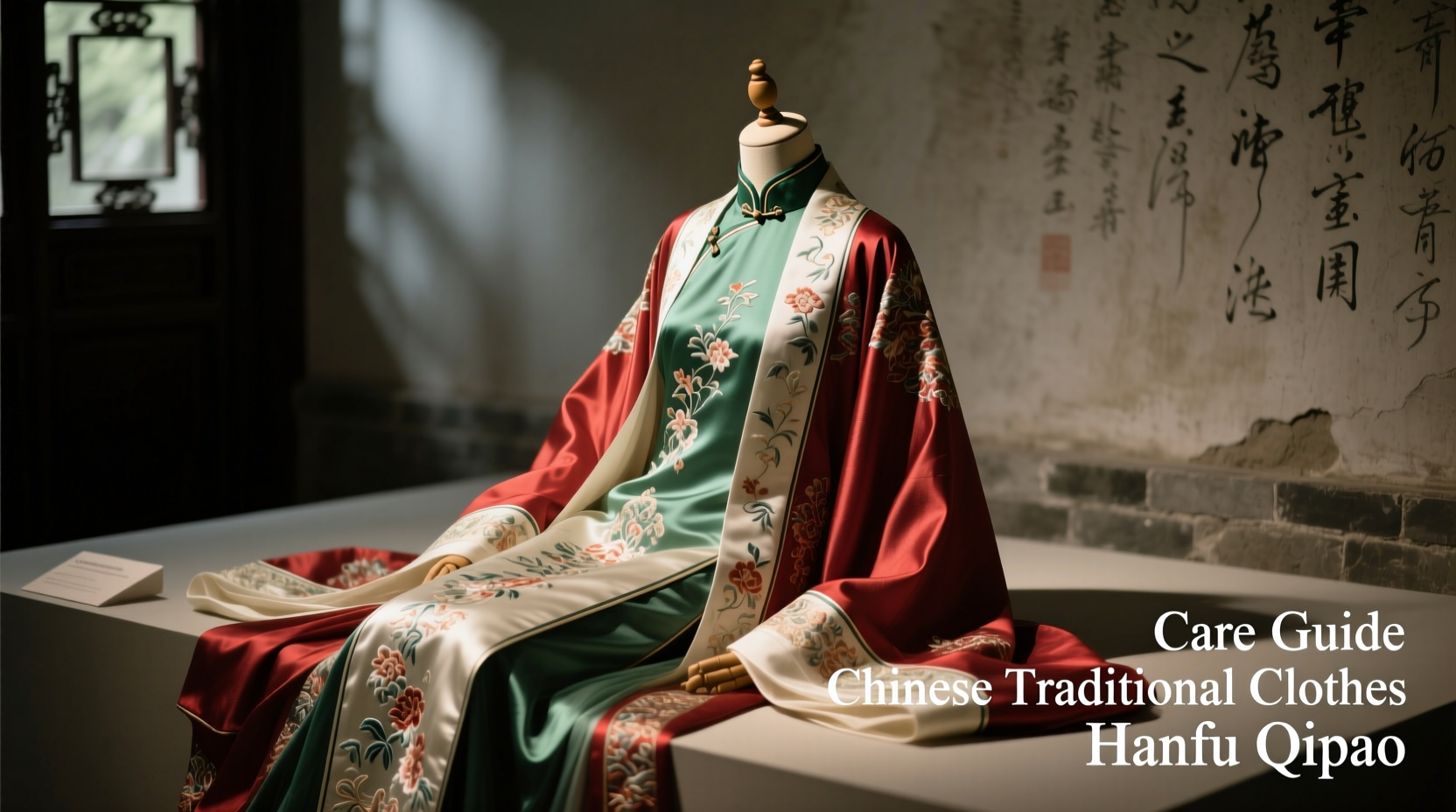
Preserving the integrity of historical and contemporary Asian garments requires more than gentle detergents; it demands an understanding of textile chemistry. When curating a wardrobe that includes various types of Chinese traditional clothes, one must recognize that the fiber dictates the maintenance protocol. The structural engineering of a Hanfu or the bias-cut drape of a Qipao relies entirely on the health of its underlying threads.
Mulberry Silk (Sangcan 桑蚕丝)
The backbone of Chinese luxury garments, mulberry silk is a protein fiber composed of fibroin and sericin. Because it is a protein, it is highly susceptible to alkaline degradation. Standard laundry detergents (which typically have a pH of 9 to 11) will strip the silk of its natural luster, cause the fibers to become brittle, and eventually lead to shredding. According to conservation guidelines from the Victoria and Albert Museum, silk must only be cleaned with pH-neutral (pH 7) solutions specifically formulated for protein fibers, or through professional hydrocarbon dry cleaning.
Gambiered Canton Gauze (Xiangyunsha 香云纱)
Often referred to as 'soft gold,' Xiangyunsha is a highly specialized silk from Guangdong province. It is dyed using the tannin-rich juice of the Dioscorea cirrhosa tuber and then coated in iron-rich river mud (hetang ni). This creates a chemical reaction that yields a dark, crinkled, water-resistant fabric. Authentic Xiangyunsha yardage can range from $150 to over $400 USD per meter. Care Rule: Never soak Xiangyunsha. The tannin coating can be compromised by prolonged water exposure. Spot clean with a damp cloth and air dry in the shade. The fabric naturally softens with body heat and wear, meaning dry cleaning should be avoided as it strips the patina.
Ramie (Zhu Ma 苎麻)
Used heavily in summer Hanfu and historical peasant or scholar garments, ramie is a cellulose bast fiber. Unlike silk, ramie can withstand higher temperatures and alkaline environments, but it is notoriously prone to hard creasing. Ramie garments should be washed in cool water, removed while slightly damp, and ironed on a high-heat setting with heavy steam to relax the rigid cellulose structure.
Garment-Specific Care Protocols
Beyond the fabric, the silhouette and construction of the garment dictate how it must be handled, stored, and worn.
The Mamianqun (Horse-Face Skirt 马面裙)
The Mamianqun is a marvel of structural pleating, featuring flat front and back panels (ma mian) with intricate knife pleats (zhe) on the sides. Modern reproductions often use synthetic blends or heavy brocades (zhuanghua) to hold the pleats, but traditional silk versions require meticulous care.
- Washing: Avoid machine washing entirely. The agitation will permanently blow out the knife pleats. If immersion is necessary, gently swish in a basin of cold water with silk wash. Do not wring.
- Drying & Ironing: Hang the skirt on a multi-clip hanger, ensuring the weight of the water pulls the pleats straight. Iron only the flat panels. For the pleats, use a specialized pleater board or steam them while hanging; never press an iron directly across the pleats, as this will flatten the structural folds.
- Storage: Do not fold the skirt along the pleats. The Metropolitan Museum of Art's Textile Conservation Department recommends rolling pleated garments around acid-free tissue tubes to prevent permanent crease memory.
The Qipao / Cheongsam (旗袍)
The modern Qipao is famous for its form-fitting, bias-cut silhouette, high Mandarin collar, and intricate Pankou (frog knot buttons). Often crafted from delicate silk crepe, velvet, or embroidered organza, the Qipao presents unique maintenance challenges.
- The Pankou Problem: Frog buttons are often made with a hard-core wire or tightly wound silk thread (ying hua). Never iron directly over Pankou; the heat can melt synthetic cores or scorch the silk threads. Always iron the garment inside-out using a cotton pressing cloth.
- Deodorizing: Because Qipaos are worn close to the body, they absorb perspiration, which contains salts and urea that degrade silk. After wearing, hang the garment in a well-ventilated, shaded area for 24 hours. Use a handheld steamer from a distance of 12 inches to refresh the fibers and release odors without wetting the delicate dyes.
The Tang Suit & Aoqun Jackets (唐装 / 袄裙)
Characterized by heavy brocades, stiff interfacing, and wide sleeves, these jackets are structured outerwear. The stiff interfacing (often made from rice paste or modern fusible webs in historical vs. contemporary pieces) means these garments should never be submerged in water. Water will dissolve historical rice-paste interfacing, causing the garment to collapse and warp. Rely on professional dry cleaning for structured brocade jackets, and use a soft-bristle garment brush to remove surface dust after each wear.
The Master Care Matrix
Use this quick-reference table to determine the safest maintenance route for your specific garment type.
| Garment / Fabric Type | Wash Method | Water Temp | Ironing Protocol | Storage Method |
|---|---|---|---|---|
| Hanfu (Silk Crepe) | Hand wash (pH-neutral) | Cold (Max 20°C) | Low heat, inside-out, pressing cloth | Padded hanger, cotton garment bag |
| Mamianqun (Brocade) | Spot clean / Dry clean | N/A | Steam only; never press pleats | Rolled on acid-free tube |
| Qipao (Xiangyunsha) | Wipe with damp cloth | Cold | Do not iron; steam lightly | Folded with tissue, cedar chest |
| Scholar Robe (Ramie) | Machine wash (gentle) | Warm (30°C) | High heat with heavy steam | Folded flat in drawer |
| Tang Suit (Heavy Brocade) | Professional Dry Clean | N/A | Medium heat, use velvet board | Padded hanger, avoid wire |
Storage, Pest Control, and Historical Airing
The environment in which you store your garments is just as critical as how you wash them. Silk is a prime target for protein-eating pests like clothes moths and carpet beetles. However, modern synthetic mothballs (containing naphthalene or paradichlorobenzene) are highly toxic and can cause chemical reactions with the metallic threads (zhijin) often found in ceremonial Hanfu or bridal Qipaos, leading to blackening and tarnishing.
The Camphor Wood Solution
Historically, Chinese nobility stored their precious silks in chests made of Camphor wood (Zhangmu 樟木). Camphor wood naturally repels insects while emitting a mild, pleasant aroma that does not chemically react with gold or silver threads. If you do not have a camphor chest, wrap your garments in unbleached, acid-free muslin or cotton sheets. Avoid plastic dry-cleaning bags, which trap moisture and emit gases that yellow silk over time.
The Tradition of Shai Yi (晒衣)
During the Ming and Qing dynasties, the imperial household engaged in Shai Yi—the ritual airing and sun-drying of garments during the autumn to prevent mold and mildew. However, modern conservation science warns against this practice for antique or highly saturated garments. The Palace Museum in Beijing notes that while historical airing was necessary in humid climates, direct UV radiation causes irreversible photodegradation of silk dyes, leading to severe fading and fiber embrittlement. Today, 'airing' should be done in a shaded, climate-controlled room with low humidity (ideally 45-55%) and good air circulation, rather than in direct sunlight.
"The preservation of a cultural garment is not merely about keeping the fabric intact; it is about respecting the engineering, the dye chemistry, and the artisan hours woven into every seam. Treat your Hanfu and Qipao not as costumes, but as living textile archives."
By understanding the distinct material needs of these garments, collectors and wearers can ensure that the vibrant legacy of Chinese textile arts remains intact for future generations. Whether you are maintaining a daily-wear cotton Hanfu or an heirloom silk Qipao, mindful maintenance is the ultimate act of cultural respect.