Preserving Heritage: Care Guide for Chinese Dress Types
The Fabric Foundation: Understanding Material Composition
Proper maintenance of traditional garments begins with a profound understanding of their material composition. Unlike modern fast fashion, historical and contemporary Chinese dress types are constructed from natural fibers that possess unique chemical and structural properties. According to conservation guidelines published by the China National Silk Museum, the protein structure of mulberry silk (Bombyx mori) is highly sensitive to alkaline environments. Using standard laundry detergents (which typically have a pH of 9 to 10.5) will strip the fibroin proteins, causing irreversible brittleness and loss of luster.
Conversely, plant-based fibers like ramie (xia bu) and cotton possess high tensile strength but are prone to shrinkage if exposed to sudden thermal shocks. A specialized category within Chinese textiles is Xiangyunsha (gambiered Guangdong gauze). This luxurious, mud-dyed silk is treated with tannin-rich gambier juice and iron-rich river mud, creating a rustling, water-resistant fabric that costs upwards of $200 to $400 per meter. Xiangyunsha must never be soaked or subjected to harsh friction, as this disrupts the delicate tannin-iron complex that gives the fabric its signature patina and structural integrity.
Specific Care Protocols by Chinese Dress Types
Because the construction and drape of different garments dictate how they interact with gravity, water, and storage environments, a one-size-fits-all approach to garment care is culturally and practically inadequate. Below are the specific protocols for maintaining the most prominent Chinese dress types.
Qipao (Cheongsam): Managing Bias-Cut Silk and Brocade
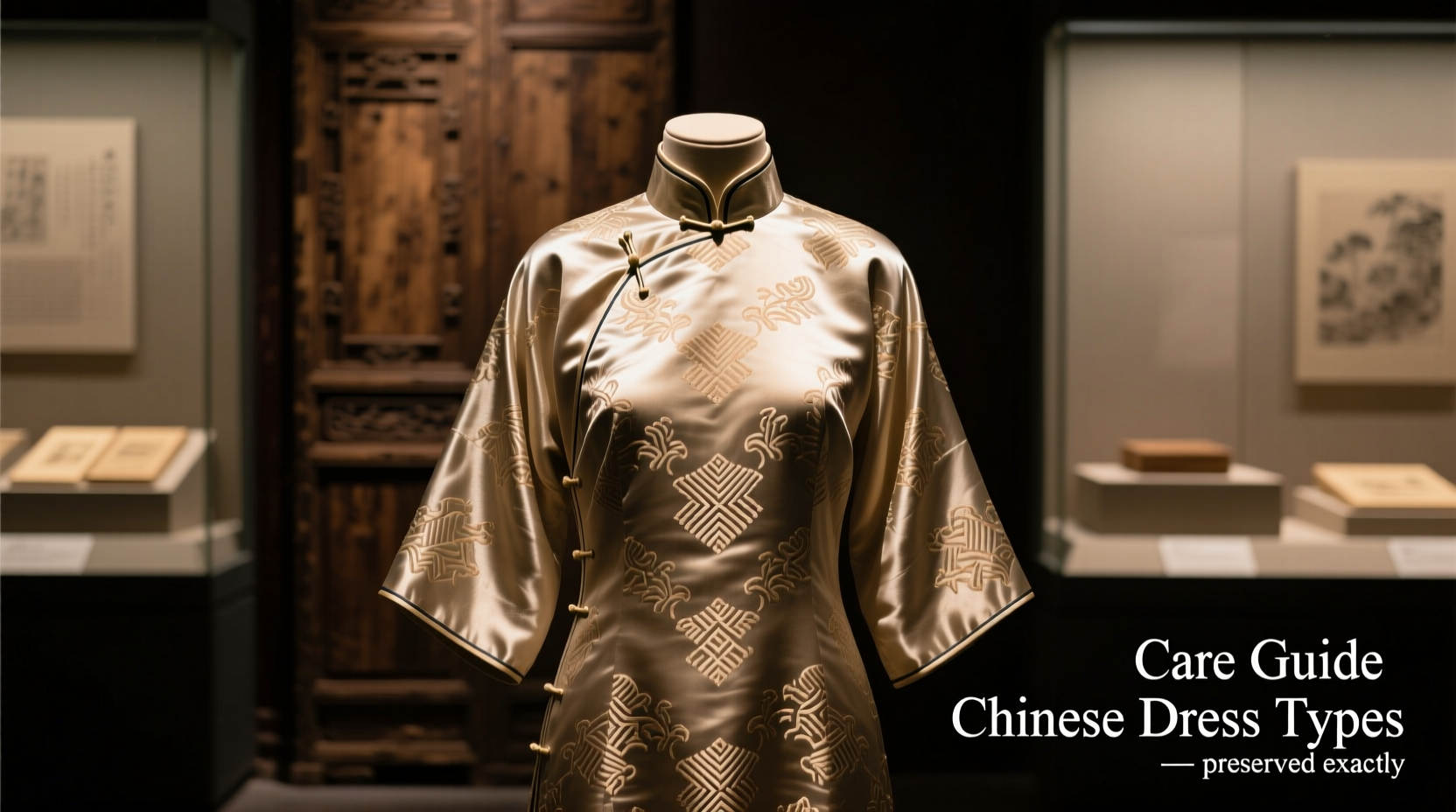
The modern qipao, which evolved in 1920s and 1930s Shanghai, is frequently cut on the bias to allow the woven silk charmeuse or velvet to stretch and contour to the body. This bias-cut construction makes the garment highly susceptible to gravity-induced warping. Never hang a heavy silk or brocade qipao on a standard wire or wooden hanger for extended periods; the weight of the fabric will pull the bias threads out of alignment, permanently distorting the hemline and side slits.
Furthermore, the intricate pankou (frog fasteners) require special attention. Before any cleaning or long-term storage, gently unfasten the knots to prevent stress on the thread anchors. When storing, stuff the hollow loops of the pankou with acid-free tissue paper to maintain their three-dimensional shape and prevent permanent creasing in the surrounding silk.
Hanfu: Maintaining Multi-Layered Ramie and Silk
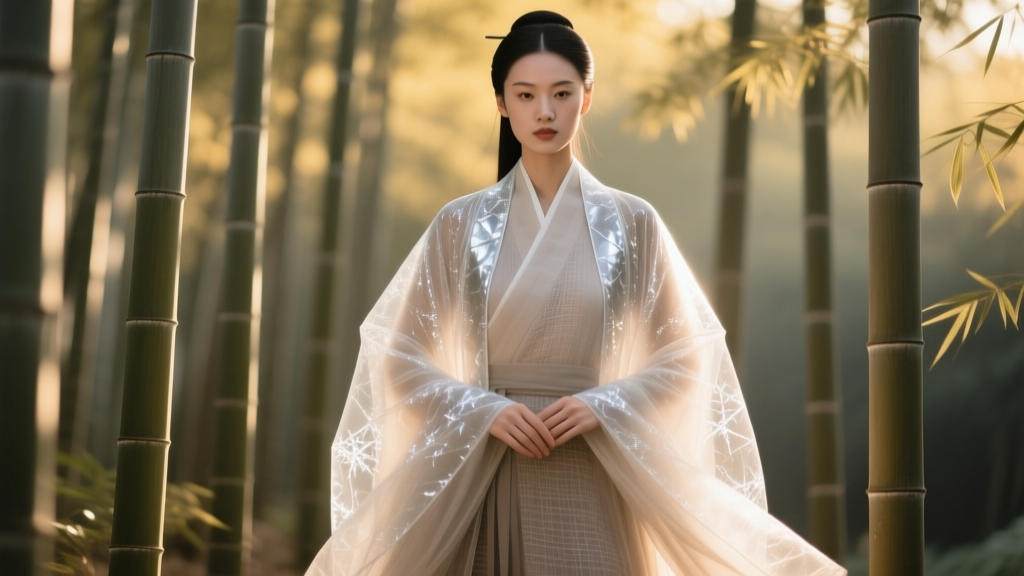
The broader category of Hanfu encompasses various historical silhouettes, including the ruqun (blouse and skirt) and aoqun (lined jacket and skirt). Hanfu garments feature voluminous sleeves and overlapping collars (jiaoling youren). The sheer volume of fabric means these garments hold a significant amount of water when washed, making them exceptionally heavy and prone to tearing at the seams if wrung out.
For everyday cotton or ramie Hanfu, hand-washing in cool water (below 30°C or 86°F) with a neutral pH detergent is essential. Support the entire weight of the wet garment with both arms when lifting it from the basin. For silk gauze (luo) or damask Hanfu, avoid agitation entirely; instead, use a submersion and gentle pressing technique to release soil without disturbing the delicate weave.
Mamianqun (Horse-Face Skirt): Preserving Pleats and Woven Gold
Originating in the Song and popularized in the Ming Dynasty, the Mamianqun features flat front and back panels with deeply pleated sides. Many contemporary artisan versions incorporate zhuanghua (woven gold or silver threads). The primary maintenance challenge here is pleat preservation. Water and heat are the enemies of sharp pleats. If a Mamianqun must be cleaned, it should ideally be professionally dry-cleaned by a specialist who understands historical pleating techniques.
If spot-cleaning at home, use a microfiber cloth dampened with distilled water and blot gently. Never use a steam iron directly on the pleats, as the moisture will cause the folds to swell and lose their crisp edges. Instead, use a dry iron on a low synthetic setting with a Teflon pressing cloth, working from the inside of the skirt outward.
Tang Suit (Tangzhuang): Caring for Structured Brocade
The Tangzhuang, a jacket style that gained global prominence in the early 2000s but draws from late Qing Dynasty equestrian jackets, is typically made from stiff, heavily sized brocades and features a mandarin collar. The interfacing used in the collar and front plackets can bubble or separate if exposed to the harsh chemical solvents used in standard commercial dry cleaning. Always request a gentle, petroleum-based solvent cleaning if the care label permits, and ensure the cleaner pads the structured collar to prevent crushing during the pressing phase.
Washing Matrix: Water, Detergents, and Techniques
To provide a quick reference for daily maintenance, consult the following matrix tailored to specific fabrics commonly found across Chinese dress types. This framework aligns with best practices recommended by the Textile Conservation Department at The Metropolitan Museum of Art.
| Garment / Fabric | Wash Method | Detergent pH Level | Drying Protocol | Ironing Temperature |
|---|---|---|---|---|
| Silk Qipao (Charmeuse) | Submersion (No agitation) | Neutral (pH 7.0) | Flat dry, shaded | Low (110°C) with press cloth |
| Ramie Hanfu (Xia Bu) | Hand wash, gentle press | Mildly Acidic (pH 6.0-6.5) | Line dry, indirect sun | High (200°C) while damp |
| Xiangyunsha (Mud Silk) | Spot clean only | N/A (Use distilled water) | Air dry flat, away from heat | Do not iron; steam lightly |
| Brocade Tangzhuang | Professional Dry Clean | N/A (Solvent based) | Professional finish | Low (110°C) on reverse side |
| Cotton Mamianqun | Machine (Delicate, bagged) | Neutral (pH 7.0) | Flat dry, reshape pleats | Medium (150°C) inside out |
Archival Storage: Protecting Garments from Light and Pests
The longevity of cultural garments relies heavily on their storage environment. Ultraviolet (UV) light causes photo-oxidation, leading to the yellowing of silk and the fading of natural plant dyes like indigo and madder. Store all Chinese dress types in a dark, climate-controlled environment. The ideal relative humidity (RH) for mixed textile collections is between 45% and 55%, with a stable temperature of around 18°C to 20°C (64°F to 68°F). Fluctuations in humidity cause fibers to expand and contract, leading to mechanical fatigue and micro-tears in ancient or delicate weaves.
For pest management, avoid direct contact with mothballs (naphthalene or paradichlorobenzene), which emit toxic fumes that can chemically alter silk proteins and leave a persistent, noxious odor. Instead, utilize natural deterrents like dried lavender sachets or cedar blocks, ensuring they are wrapped in unbleached cotton muslin so their natural oils do not transfer onto the garment. As noted in conservation literature by the Textile Society of America, buffering the storage environment with acid-free, lignin-free tissue paper is critical for neutralizing ambient acidity and providing physical support to the garment's folds.
Stain Management and Professional Conservation
When accidents occur, identifying the stain's chemical nature is paramount before attempting removal. Protein-based stains (blood, sweat, dairy) require cold water and enzymatic cleaners, whereas tannin-based stains (tea, wine, coffee) respond better to mild acidic solutions. However, applying commercial stain removers to historical brocades or metallic-threaded zhuanghua can result in catastrophic tarnishing or dye bleeding.
For high-value bespoke garments (such as a hand-embroidered qipao costing $1,500 to $3,000+) or antique Hanfu pieces, bypass commercial dry cleaners entirely. Seek out a professional textile conservator. Conservators utilize specialized techniques, such as localized solvent testing and microscopic thread stabilization, ensuring that the garment's historical and material integrity remains uncompromised for future generations. By treating these garments not merely as clothing, but as living artifacts of Asian sartorial heritage, we ensure their stories continue to be worn and told.