Expert Care Guide for Your Cheongsam with Skirt Set
The Evolution of the Two-Piece Cheongsam Ensemble
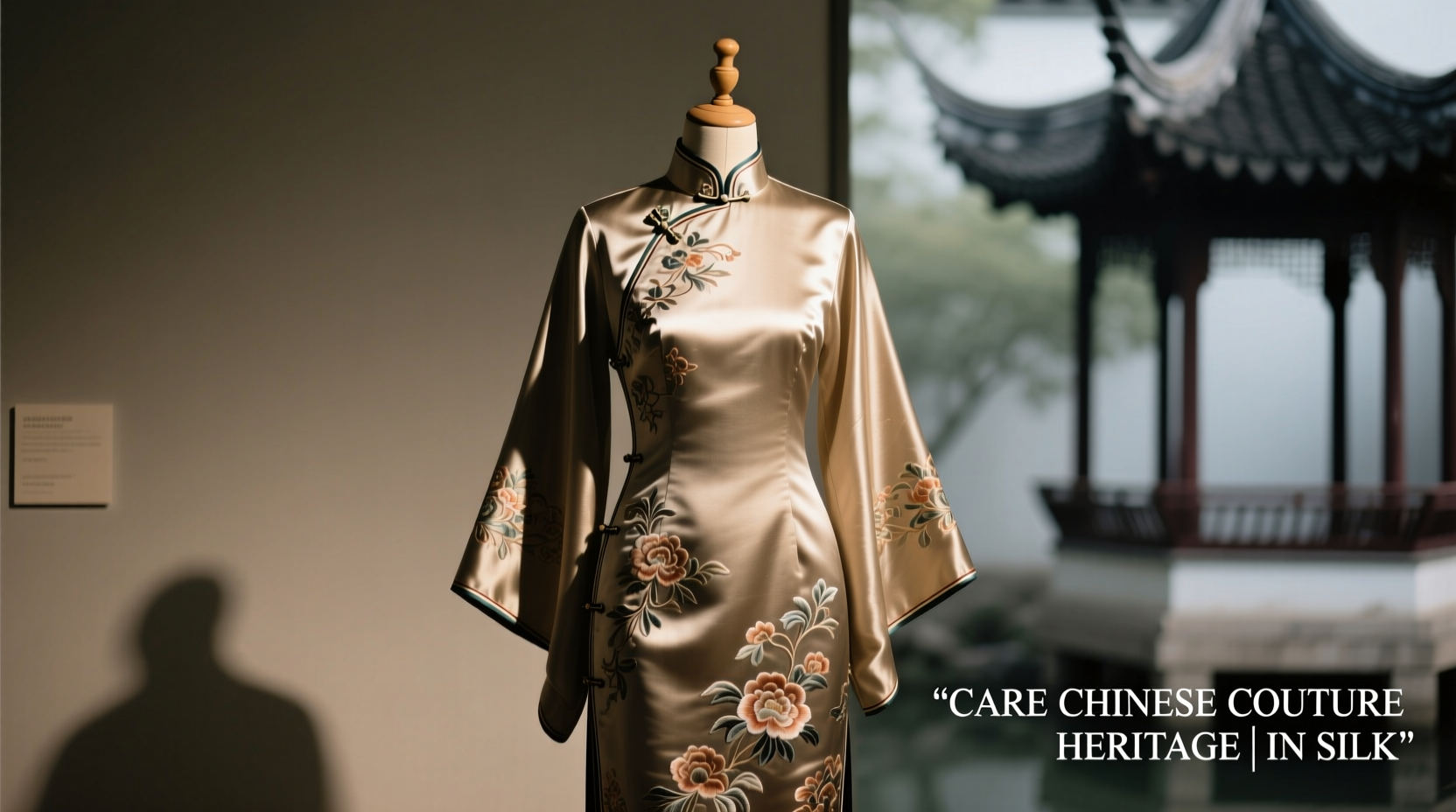
When discussing traditional Chinese dress, the global imagination often defaults to the one-piece, form-fitting qipao of the 1930s. However, the modern Xinzhongshi (New Chinese Style) movement has popularized a highly versatile and historically rooted alternative: the cheongsam with skirt. This two-piece ensemble, known historically as shangyi xiaqun (top and skirt), pairs a structured, cheongsam-style bodice featuring a Mandarin collar (yuanling) and intricate frog buttons (pankou) with a flowing lower garment. Frequently, this skirt is a mamianqun (horse-face skirt) characterized by its flat front and back panels with heavily pleated sides, or a modern A-line pleated midi skirt.
Caring for a two-piece set requires a bifurcated approach. The top demands meticulous attention to its structured collar and delicate knotwork, while the skirt requires specialized care to maintain its architectural pleats and heavy drape. According to the textile conservation guidelines outlined by the Victoria and Albert Museum's Asian textile archives, mixed-garment ensembles from the Republican era often suffered from differential fading and fabric degradation because the top and skirt were subjected to varying levels of friction and light exposure. Understanding these structural nuances is the first step in preserving your garment.
Fabric Identification and the Washing Matrix
Before introducing water or heat to your cheongsam with skirt set, you must accurately identify the fiber content. Contemporary Xinzhongshi brands frequently blend traditional aesthetics with modern textiles to improve durability, but authentic artisanal pieces rely on heritage fabrics. The China National Silk Museum emphasizes that improper washing of protein-based fibers like silk causes irreversible sericin breakdown, leading to a loss of the fabric's natural luster and structural integrity.
| Fabric Type | Common Application | Washing Protocol | Drying Method |
|---|---|---|---|
| Mulberry Silk (Sangcan Si) | Lightweight tops, summer skirts | Dry clean preferred. If hand-washing, use cold water and pH-neutral silk wash. Never wring. | Flat dry in the shade. Avoid direct UV exposure which yellows silk. |
| Song Brocade (Song Jin) | Winter tops, structured bodices | Strictly professional dry clean. Water will distort the metallic or dense silk warp/weft threads. | N/A (Professional handling only) |
| Cotton-Linen Blends | Everywear skirts, casual tops | Machine wash cold on delicate cycle inside a mesh laundry bag. | Tumble dry low or line dry. Iron while slightly damp. |
| Acetate / Polyester | Mass-market mamianqun skirts | Hand wash warm with mild detergent. Highly stain-resistant. | Hang dry. Heat-set pleats will maintain shape without ironing. |
Preserving the Pankou (Frog Buttons)
The pankou are not merely fasteners; they are the soul of the cheongsam top. Handcrafted from silk-wrapped copper wire or stiffened fabric cords, these intricate knots (such as the plum blossom, butterfly, or swastika motifs) are highly susceptible to water damage and friction. When washing the cheongsam top, always fasten the pankou to prevent the loops from stretching or catching on the fabric. If a knot becomes misshapen, do not pull it apart. Instead, use a pair of flat-nosed jewelry pliers to gently coax the silk-wrapped wire back into its geometric alignment. For fabric-only pankou, a light misting of starch spray followed by gentle molding with your fingertips will restore their rigidity.
Skirt Maintenance: Pleats, Hems, and Drapes
The skirt component of your ensemble, particularly if it is a traditional mamianqun, requires a completely different maintenance philosophy. The horse-face skirt relies on sharp, knife-edge pleats on the sides while maintaining flat, unpleated panels at the front and back. The Kyoto Costume Institute notes in their extensive 20th-century Chinese dress archives that the structural integrity of these pleats is paramount to the garment's kinetic movement and visual rhythm.
Washing and Resetting Pleats
Never machine-wash a silk or wool-blend mamianqun. The agitation will permanently destroy the pleat lines, turning an architectural masterpiece into a shapeless tube of fabric. If the skirt is made of synthetic fibers (like high-grade polyester crepe), the pleats are heat-set at the factory and will survive a gentle cold wash. To reset loosened pleats on natural fibers, you must use a specialized pleating board or carefully pin each fold onto an ironing board. Use a steam iron on a low-silk setting, hovering exactly one inch above the fabric. The steam will relax the fibers; follow immediately with a dry, cool wooden clapper (a tailor's tool) to press the moisture out and set the sharp crease without crushing the silk's pile.
Protecting the Waistband and Hardware
Traditional skirts often feature wide, stiffened waistbands made of cotton or brocade, fastened with ties, hooks, or modern hidden zippers. The waistband absorbs the majority of the wearer's body oils and sweat. To prevent permanent staining and fabric rot, always wear a thin, breathable cotton undershirt tucked into the skirt, and wipe the interior of the waistband with a slightly damp, white microfiber cloth after each wear. Allow it to air dry completely before storing.
Steaming vs. Ironing: Temperature Controls
Direct heat is the enemy of traditional Chinese textiles. Ironing a cheongsam top directly, especially over the raised embroidery or the thick seams of the side plackets, will create permanent "shine" marks on silk and flatten three-dimensional Suzhou embroidery. Always use a pressing cloth (a clean, undyed cotton muslin) between the iron and the garment. For the skirt, a vertical garment steamer is vastly superior. Steam the skirt from the inside out to lift the fibers and remove odors without pressing the pleats flat against the body. Hold the steamer nozzle at least two inches away from the fabric to prevent water spotting, which can leave mineral rings on delicate dyes.
Seasonal Storage and Pest Prevention
Proper storage of a cheongsam with skirt set dictates that the two pieces should be stored separately to prevent dye transfer and allow for proper air circulation.
- The Top: Never hang a heavy, embroidered cheongsam top on a wire hanger; the weight of the embroidery will distort the shoulder seams and stretch the delicate armholes. Use a wide, padded satin hanger. If the top is heavily beaded or made of fragile vintage silk, fold it using acid-free tissue paper to buffer the folds, and store it flat in an archival cotton box.
- The Skirt: A mamianqun should ideally be hung on a skirt hanger with wide, padded clips gripping the waistband. If drawer space is your only option, fold the skirt along its existing pleat lines, layering acid-free tissue paper between the folds to prevent sharp creases from turning into permanent fractures in the silk fibers.
The Economics of Professional Restoration
Even with meticulous home care, a high-quality cheongsam with skirt set will occasionally require professional intervention. Understanding the market rates for specialized tailoring can help you budget for the garment's lifecycle. In major metropolitan areas with skilled traditional tailors (such as Shanghai, Hong Kong, or specialized ateliers in London and New York), expect the following price ranges:
- Professional Dry Cleaning (Specialist): $25 – $45 USD per piece. Ensure the cleaner has experience with structured garments and pankou.
- Pankou Repair or Replacement: $15 – $35 USD per knot. Hand-tying and securing new silk-wrapped buttons is a labor-intensive artisanal skill.
- Pleat Resetting (Mamianqun): $50 – $90 USD. This involves meticulous hand-pinning and professional steam-pressing to restore factory-sharp side pleats.
- Embroidery Restoration: $100+ USD. Re-securing loose metallic threads or repairing snagged Suzhou embroidery requires a master artisan.
"A two-piece Chinese ensemble is a dialogue between structure and fluidity. The top grounds the wearer in architectural tradition, while the skirt allows for kinetic expression. Caring for them requires respecting both the rigidity of the collar and the movement of the drape." — Textile Conservation Notes, Asian Garment Archives.
By treating your cheongsam with skirt set not merely as clothing, but as a wearable archive of Asian sartorial engineering, you ensure that its elegance, structural integrity, and cultural resonance will endure for decades to come.