Authentic Hanfu Shopping Guide 2026

The global appreciation for traditional Asian dress has evolved significantly over the last decade. By 2026, the market for ancient Chinese garments—collectively known as Hanfu (汉服)—has matured from a niche hobby into a robust global industry. However, this boom has also flooded the market with inaccurate costumes, synthetic blends, and stolen designs. For serious collectors, cultural enthusiasts, and heritage practitioners, distinguishing between historical restoration (fuguyuan) and modern fantasy (gufeng) is essential.
This comprehensive buying guide will help you navigate the complex landscape of ancient Chinese garments, detailing historical silhouettes, authentic fabric weaves, current pricing matrices, and the most reputable artisan studios and retailers available today.
Decoding the Market: Historical Accuracy vs. Modern Fantasy
When shopping for ancient Chinese garments, buyers must understand the distinction between two primary market categories:
- Fuguyuan (Historical Restoration): Garments meticulously recreated based on archaeological textiles, tomb murals, and museum artifacts. These prioritize historical accuracy in silhouette, weave structure, and motif.
- Gufeng (Ancient Style/Fantasy): Modern interpretations that blend historical elements with contemporary aesthetics, often utilizing anachronistic fabrics, zippers, or fantasy-inspired embroidery. While beautiful, they are not historically accurate ancient Chinese garments.
Furthermore, the Hanfu community strictly differentiates between Zheng (orthodox/original designs from reputable brands) and Shan (knockoffs that steal patterns from independent designers). Always purchase from recognized Zheng retailers to support the artisans driving the cultural revival.
Essential Silhouettes: A Buyer’s Glossary
Ancient Chinese clothing is defined by its flat-cutting technique, which relies on fabric draping rather than darts and tailoring to fit the body. Here are the foundational silhouettes you will encounter when shopping:
| Garment Name | Dynasty Peak | Key Construction Features | Best For |
|---|---|---|---|
| Ruqun (襦裙) | Tang / Song | Short cross-collared or parallel-collared jacket (Ru) paired with a high-waisted or waist-level pleated skirt (Qun). | Warm weather, daily wear, beginners. |
| Shenyi (深衣) | Han / Ming | A one-piece robe where the top and bottom are cut separately but sewn together, wrapping around the body. | Formal ceremonies, scholarly events. |
| Yuanlingpao (圆领袍) | Tang / Ming | Round-collared robe with side slits, often worn with a leather or silk belt and boots. | Menswear, gender-neutral styling, outerwear. |
| Mamianqun (马面裙) | Ming / Qing | Horse-face skirt featuring flat front and back panels with deep side pleats, heavily decorated with woven brocade borders. | Versatile wear, easily paired with modern tops. |
Fabric Composition: Identifying Quality in Traditional Weaves
The soul of authentic ancient Chinese garments lies in the textile. According to the China Silk Museum, historical Chinese textiles relied on complex weave structures rather than surface printing. When evaluating a garment, check the product description for these specific materials:
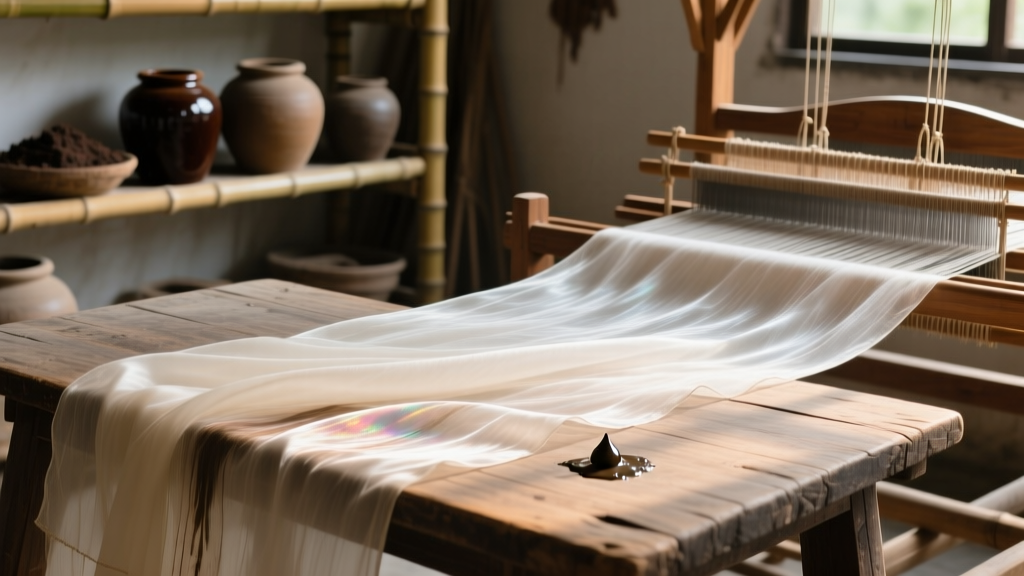
Xiangyunsha (Gambiered Canton Gauze)
Originating from Guangdong province, this is one of the most expensive and labor-intensive silks in the world. It is dyed using the juice of the Dioscorea cirrhosa tuber and coated with iron-rich mud from the Pearl River Delta. The result is a dark, crisp, water-resistant fabric with a distinct crackled texture that softens beautifully over time. Authentic Xiangyunsha commands a premium price and is highly prized for summer Ruqun and Mamianqun.
Song Brocade and Shu Brocade
Unlike modern digital printing, true brocade (Zhijin) features patterns woven directly into the fabric using metallic or contrasting silk threads. Song Brocade is known for its soft, matte finish and intricate geometric or floral motifs, ideal for delicate jackets. Shu Brocade from Sichuan is heavier, more vibrant, and often used for structured outer garments and skirt borders.
Ramie and Linen
Before silk became widespread, commoners and scholars alike wore garments made from ramie and hemp. High-quality, hand-loomed ramie offers exceptional breathability and a beautiful, slubbed texture that is historically accurate for Song dynasty scholar robes and undergarments.
2026 Pricing Matrix: Budgeting for Your Collection
Prices for ancient Chinese garments vary wildly based on fabric authenticity, embroidery techniques (hand vs. machine), and brand prestige. Below is a realistic pricing guide for the current market.
| Market Tier | Typical Fabrics | Price Range (USD) | What to Expect |
|---|---|---|---|
| Entry / Accessible | Polyester blends, cotton, basic viscose | $40 - $120 | Machine embroidery, standard sizing, fantasy motifs. Good for casual wear but lacks historical drape. |
| Mid-Tier / Enthusiast | Mulberry silk, silk-cotton blends, rayon | $150 - $400 | Historically accurate silhouettes, woven jacquard patterns, reputable brand designs. |
| High-End / Artisan | Xiangyunsha, authentic Song/Ming brocade, real gold thread | $500 - $2,500+ | Museum-grade restoration, hand-embroidery, custom flat-cut tailoring, heirloom quality. |
Where to Shop: Navigating the Hanfu Retail Landscape
Finding authentic ancient Chinese garments requires looking beyond standard fast-fashion marketplaces. The epicenter of Hanfu retail remains China's domestic e-commerce platforms, though international access has improved significantly.
Top Domestic Chinese Brands (Available via Taobao / Tmall)
- Ming Huatang (明华堂): The gold standard for Ming dynasty restoration. Their garments are meticulously researched, utilizing custom-woven brocades and traditional tailoring. Prices are in the high-end tier, but the cultural and historical value is unmatched. As noted by textile historians at the Palace Museum, brands like Ming Huatang have been instrumental in reviving lost weaving techniques.
- Zhongling (重回汉唐): An excellent mid-tier brand offering a wide variety of dynasty-specific garments, from Tang dynasty Yuanlingpao to Song dynasty Ruqun. They balance historical accuracy with modern wearability.
- Shisan Yu (十三余): While leaning slightly toward gufeng (fantasy) and modern aesthetics, they offer highly accessible, beautifully designed entry-level garments that are perfect for beginners.
International Boutiques and Proxies
If you do not read Chinese or lack a domestic payment method, you can use shopping agents (proxies) like Superbuy or CSSBuy to purchase directly from Taobao. Alternatively, look for specialized international Hanfu boutiques on Etsy or independent Shopify stores that explicitly state their partnerships with Zheng (original) Chinese brands. Always cross-reference the brand name to ensure you are not buying unauthorized knockoffs.
Sizing, Tailoring, and the Art of the Cross-Collar
Shopping for ancient Chinese garments requires a paradigm shift in how you think about sizing. Because traditional Hanfu is flat-cut without Western-style darts, bust and waist measurements are largely irrelevant.
The Crucial Measurements
- Shoulder Width: The most critical measurement. The shoulder seam must sit correctly to ensure the sleeves drape properly and the collar lies flat against the collarbone.
- Garment Length: Measured from the base of the neck to the desired hemline (usually the ankle bone for robes, or the floor for skirts).
- Sleeve Span: Historical garments often feature elongated sleeves that cover the hands. Check the 'sleeve length' (from center back to cuff) to ensure you achieve the correct historical drape.
The Golden Rule: Jiaoling Youren (交领右衽)
When wearing cross-collared garments, the left side of the collar must always cross over the right side, forming a 'y' shape from the wearer's perspective. This is known as Jiaoling Youren. According to the Metropolitan Museum of Art's Asian Textile archives, this right-lapel closure was a defining marker of Han civilization, distinguishing it from neighboring nomadic tribes who historically closed their garments left-over-right. Wearing it backward is culturally taboo, as the left-over-right style is traditionally reserved for the deceased.
Final Thoughts for the Conscious Buyer
Purchasing authentic ancient Chinese garments is an investment in living history. By prioritizing historical silhouettes, supporting original designers, and understanding the profound cultural significance of traditional weaves and wearing protocols, you help sustain the artisan communities keeping these ancient traditions alive in the modern era. Whether you are acquiring a museum-grade Ming dynasty robe or a breathable summer ramie jacket, approach your purchase with respect for the centuries of craftsmanship woven into every thread.