Black and White Hanfu Men: A Modern Styling Guide

The Philosophy of Monochrome: Xuan and Bai in Menswear
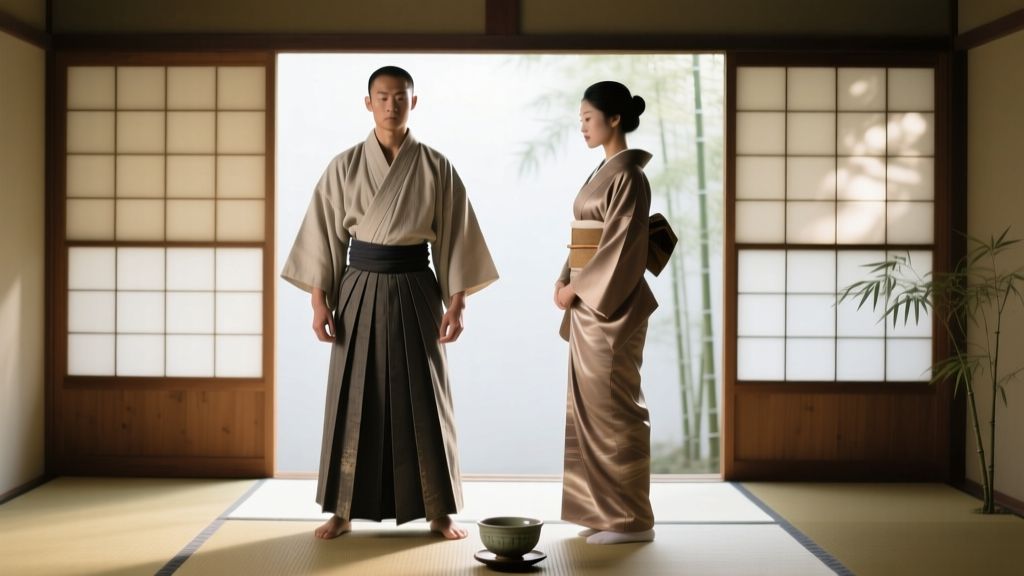
When discussing black and white hanfu men's fashion, we are engaging with a sartorial language that spans millennia. In traditional Chinese color theory and philosophy, black (Xuan) and white (Bai) are not merely the absence or presence of light; they represent the fundamental duality of the universe—the Yin and Yang. For contemporary men participating in the Hanfu revival movement, monochrome styling offers a sophisticated, minimalist alternative to the heavily embroidered, brightly colored garments often associated with courtly drama costumes. By stripping away vibrant hues, the wearer forces the observer to focus on the structural integrity of the garment, the drape of the fabric, and the subtle elegance of the silhouette.
Historically, the literati and scholars of the Ming Dynasty (1368–1644) heavily favored unadorned, monochromatic robes. As documented in the portrait archives of The Palace Museum in Beijing, scholars were frequently depicted in plain black or deep indigo robes with stark white inner collars. This aesthetic projected intellectual restraint, moral uprightness, and a detachment from the gaudy opulence of the merchant class. Today, styling black and white hanfu for men is about channeling this exact ethos: quiet luxury, historical reverence, and modern versatility.
Core Silhouettes for the Monochrome Wardrobe
To build a functional black and white hanfu men's wardrobe, one must understand the foundational cuts. Not every historical silhouette translates well to modern daily wear, but specific garments offer exceptional versatility when rendered in monochrome.
The Scholar’s Daopao (道袍)
The Daopao (often translated as the Daoist robe, though worn widely by secular scholars) is the cornerstone of men's Ming-style hanfu. It features a cross-collar, right lapel (jiaoling youren), and wide sleeves. The defining feature of the Daopao is the anbai (hidden swing flaps) on the sides. These intricate interior pleats allow for a wide range of motion while maintaining a modest, unbroken exterior line. A black Daopao crafted from heavy linen or raw silk provides a striking, architectural silhouette that works beautifully as a modern overcoat or statement piece for tea ceremonies and cultural events.
The Martial Yisan (曳撒)
For a more active, structured look, the Yisan is unparalleled. Originating from Mongol and Central Asian influences during the Yuan and early Ming dynasties, the Yisan features a fitted bodice with a densely pleated lower skirt and narrow sleeves. Rendered in stark black, a Yisan evokes the aesthetic of a Ming-era martial artist or imperial guard. It is highly practical for modern wear, as the narrow sleeves do not interfere with daily tasks, and the pleated skirt offers a dynamic, kinetic movement when walking.
Fabric Composition and Seasonal Selection
The success of a monochrome outfit relies entirely on textile quality. Without color or pattern to distract the eye, the weave, weight, and drape of the fabric take center stage. The China National Silk Museum emphasizes that historical textiles were deeply tied to seasonal rituals and social standing. Below is a guide to selecting the right fabric for your black and white hanfu.
| Fabric Type | Native Term | Season | Drape & Texture | Estimated Price (USD) |
|---|---|---|---|---|
| Ramie | Xia Bu (夏布) | Summer | Crisp, breathable, slightly textured, excellent for structured white robes. | $60 - $120 |
| Cotton-Linen Blend | Mian Ma (棉麻) | Spring/Autumn | Soft, matte finish, easy to care for, ideal for daily black Daopao. | $40 - $80 |
| Raw Silk | Sheng Si (生丝) | Spring/Autumn | Slubbed texture, natural sheen, holds shape well, luxurious but requires dry cleaning. | $150 - $300 |
| Wool Blend | Ni Zi (呢子) | Winter | Heavy, opaque, excellent thermal retention, mimics historical winter felts. | $100 - $200 |
Modern Styling: Integrating Monochrome Hanfu into Daily Wear
The greatest challenge for modern practitioners is moving hanfu out of the realm of 'costume' and into the sphere of 'clothing.' Black and white palettes make this transition significantly easier, as they align seamlessly with contemporary menswear norms.
The Art of the Inner Collar (Zhongyi)
The visual anchor of any cross-collar hanfu is the inner garment, or Zhongyi. When wearing a black outer robe, a crisp white Zhongyi is non-negotiable. The stark contrast of the white collar against the black lapel frames the face and provides a sharp, tailored look akin to a modern dress shirt and tie. For winter styling, modern men are increasingly substituting the traditional white cotton Zhongyi with a high-quality black or white merino wool turtleneck. This fusion maintains the visual geometry of the jiaoling (cross-collar) while providing modern thermal efficiency.
Footwear and Grounding the Silhouette
Traditional Hanfu footwear, such as the Yunlu (cloud-head shoes) or straw sandals, can sometimes push an outfit into theatrical territory. To ground a black and white hanfu men's ensemble in modern reality, footwear selection is critical.
- Leather Chelsea Boots: A sleek, black leather Chelsea boot pairs exceptionally well with the Yisan or a shorter Shenyi, bridging the gap between historical martial wear and modern dark-academia aesthetics.
- Minimalist Sneakers: For casual, daily wear, a pair of all-white, low-profile leather sneakers can modernize a white linen Daopao, creating a relaxed, avant-garde streetwear look.
- Derby Shoes: A polished black derby shoe works well for formal occasions, mirroring the formality of traditional black cloth boots but with contemporary tailoring.
Accessories and Headwear
Minimalism should extend to accessories. Avoid overly ornate jade pendants or theatrical stage swords. Instead, opt for a simple silver or matte black metal waist chain to secure the robe, or a subtle leather belt hidden beneath the sash. For headwear, the traditional Wangguan (scholar's net crown) is historically accurate but difficult to integrate into modern life. A simple, matte black hair tie or a minimalist silver hair stick for men with long hair provides a clean, unobtrusive finish.
'The elegance of the literati robe lies not in its ornamentation, but in the quiet dignity of its cut and the moral character of the man who wears it.' — Ming Dynasty sartorial philosophy, adapted for the modern Hanfu movement.
Sourcing and Price Guide for Authentic Garments
When purchasing black and white hanfu men's clothing, it is vital to support makers who prioritize historical accuracy in pattern drafting over fast-fashion costume production. Authentic garments are cut using traditional flat-patterning techniques, which utilize the full width of the fabric bolt and minimize waste, resulting in the characteristic dropped shoulder and generous drape.
- Entry-Level (200 - 400 CNY / $30 - $60 USD): Typically made from polyester-cotton blends. While affordable, these fabrics often lack the proper drape and can look shiny or cheap in monochrome. Best for beginners testing silhouettes.
- Mid-Tier (500 - 900 CNY / $70 - $130 USD): The sweet spot for daily wear. Garments in this range use high-quality cotton-linen blends, washed ramie, and heavy matte cottons. Construction details like interior taping and proper anbai pleating are standard.
- Bespoke and Artisan (1500+ CNY / $210+ USD): Hand-woven Xia Bu ramie, naturally dyed silks, and custom tailoring. These pieces are investment garments, often commissioned directly from independent artisans on platforms like Taobao or specialized Hanfu boutiques.
Conclusion
Styling black and white hanfu for men is an exercise in restraint, proportion, and cultural continuity. By focusing on historically accurate silhouettes like the Daopao and Yisan, selecting high-quality natural textiles, and integrating modern layering and footwear techniques, contemporary men can wear these garments not as relics of the past, but as living, breathing expressions of Eastern sartorial philosophy. The monochrome palette strips away the noise, leaving only the profound, quiet elegance of the Hanfu tradition.