A Beginner's Guide to Traditional Chinese Apparel

The global fascination with chinese apparel has surged in recent years, driven by a desire to connect with the profound artistry and history of East Asian sartorial traditions. For beginners stepping into this rich cultural tapestry, the terminology can initially seem overwhelming. From the flowing, multi-layered silhouettes of antiquity to the sleek, form-fitting cuts of the 20th century, understanding Chinese apparel requires a journey through dynastic history, regional textile mastery, and modern cultural revivals. This comprehensive guide serves as your foundational introduction, decoding the primary garment categories, essential construction details, and practical frameworks for sourcing and wearing these pieces with cultural respect.
Decoding the Spectrum: Hanfu, Qipao, and the Tang Suit
When discussing Chinese apparel, enthusiasts and historians generally categorize the garments into three distinct pillars, each representing a different era and cultural function. The first is Hanfu, the historical dress of the Han ethnic majority, spanning from the mythological Huangdi era to the late Ming Dynasty. The second is the Qipao (or Cheongsam), a modern classic born in 1920s Shanghai that revolutionized women's tailoring. The third is the Tang Suit (Tangzhuang), a hybrid jacket popularized in the late 20th century that blends Manchu riding jacket elements with Western tailoring. Understanding the distinctions between these three is the critical first step for any beginner.
Hanfu (汉服): Reclaiming Millennia of Sartorial History
Hanfu is not a single uniform, but rather a complex system of garments that evolved over three millennia. The modern Hanfu movement, driven by younger generations seeking to reconnect with pre-Qing dynasty heritage, has brought these garments back into daily life and global visibility.
Core Silhouettes: Ruqun and Aoqun
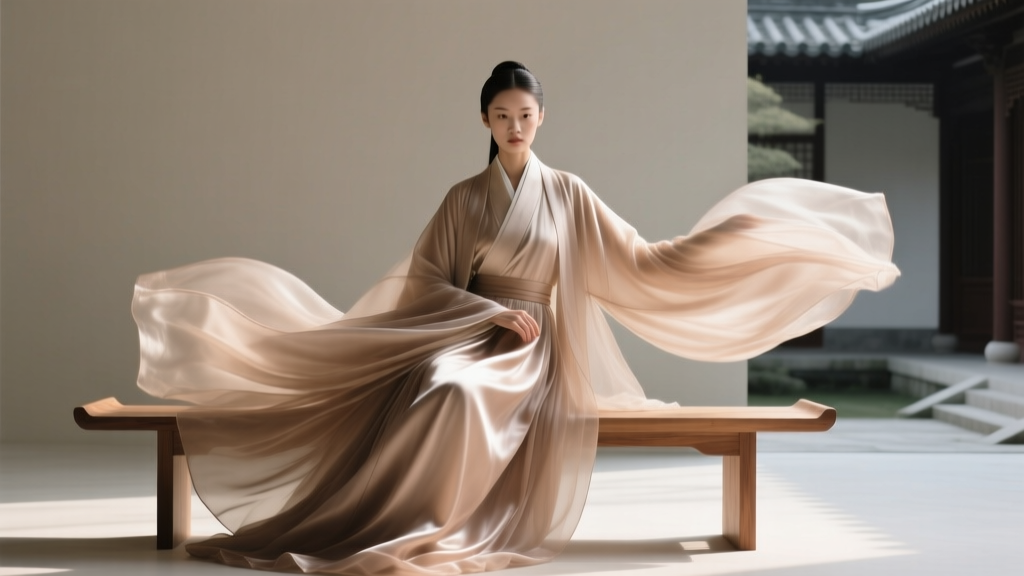
For beginners, the most accessible entry points into Hanfu are the Ruqun and the Aoqun. The Ruqun consists of a short upper garment (ru) tucked into a long, flowing skirt (qun). The Tang Dynasty popularized the Qixiong Ruqun, where the skirt is tied high above the bust, creating an elegant, elongated silhouette reminiscent of classical Dunhuang murals. Conversely, the Aoqun features a longer, lined or unlined jacket (ao) worn over a skirt, heavily associated with the Ming Dynasty. The Aoqun often features the iconic Mamianqun (horse-face skirt), characterized by its flat front and back panels with intricate pleating on the sides, allowing for ease of movement while maintaining a structured, regal appearance.
The Golden Rule: Jiaoling Youren
The most vital construction detail in traditional Hanfu is the collar alignment. Known as Jiaoling Youren (交领右衽), this dictates that the left side of the collar must cross over and cover the right side, securing on the wearer's right side. As noted by the Victoria and Albert Museum, this right-over-left configuration was a defining marker of civilization and life in ancient Chinese philosophy. Reversing this to Zuoren (left lapel over right) was strictly reserved for dressing the deceased for burial. Beginners must be meticulous about this alignment when tying their garments, as wearing it backward is considered a severe cultural faux pas.
The Qipao (旗袍): A Masterclass in 20th-Century Tailoring
While Hanfu represents ancient traditions, the Qipao represents the dynamic modernization of Chinese apparel. Originating in the cosmopolitan hub of 1920s Shanghai, the Qipao evolved from the loose, A-line robes of Manchu women into a highly tailored, body-conscious garment that celebrated the natural female form.
Anatomy of a Traditional Qipao
A true, bespoke Qipao is a marvel of flat-pattern cutting. Unlike Western garments that rely on darts to create three-dimensional shape, traditional Qipao artisans use strategic seam placements, steam-molding, and precise tension to mold the fabric to the body. Key anatomical features include:
- Mandarin Collar (Yuanling): A stiff, upright band that frames the face and elongates the neck.
- Pankou (Frog Fasteners): Intricate, hand-knotted silk closures that serve both functional and decorative purposes, often placed asymmetrically across the chest and down the side.
- Kaiqian (Side Slits): Essential for mobility, the slits typically begin at the knee or mid-thigh, revealing a subtle flash of leg or silk trousers underneath when walking.
According to The Metropolitan Museum of Art, the transition from the voluminous robes of the Qing Dynasty to the streamlined Qipao reflects broader socio-political shifts regarding women's liberation and urban modernity in early 20th-century China.
Regional Textiles: A Fabric Comparison Chart
The soul of Chinese apparel lies in its textiles. Different regions have cultivated specialized weaving and dyeing techniques over centuries. For a beginner looking to invest in their first high-quality piece, understanding these fabrics is essential.
| Fabric Name | Region of Origin | Characteristics & Process | Approx. Price Range (USD) |
|---|---|---|---|
| Xiangyunsha (Mud Silk) | Guangdong (Shunde) | Dyed with overripe persimmon juice and river mud, creating a dark, crackled, water-resistant patina. | $150 - $400 / yard |
| Song Brocade (Songjin) | Jiangsu (Suzhou) | Complex jacquard weave with a soft luster, historically used for mounting scrolls and high-end Ming-style Aoqun. | $80 - $200 / yard |
| Hangzhou Mulberry Silk | Zhejiang (Hangzhou) | Lightweight, breathable, and highly drapable. Ideal for summer Ruqun and delicate Qipao linings. | $30 - $90 / yard |
A Beginner’s Sourcing and Sizing Framework
Purchasing traditional Chinese apparel requires navigating different sizing paradigms and market tiers. Western buyers often find that standard Asian sizing runs one to two sizes smaller, particularly in the shoulders and hips.
Price Brackets and Where to Buy
- Mass-Market / Entry Level ($30 - $80 USD): Ideal for first-time Hanfu buyers or costume-grade Qipaos. Available on platforms like AliExpress or specialized Amazon storefronts. Fabrics are typically polyester blends, which lack breathability but offer durability.
- Mid-Tier / Artisanal ($120 - $350 USD): The sweet spot for serious beginners. Brands in this tier use genuine mulberry silk, linen, and jacquard weaves. Hanfu sets in this range feature accurate historical patterning and hand-embroidered motifs.
- Bespoke / Heritage ($500 - $2,500+ USD): Reserved for custom-tailored Qipaos from master artisans in Shanghai or Hong Kong, or museum-replica Hanfu woven with genuine Song Brocade. This includes multiple fittings and hand-finished Pankou knots.
Crucial Measurements
When ordering a Qipao, you must provide your Bust, Waist, Hipline, and Hollow-to-Hem measurements. For Hanfu, the critical metrics are Chest circumference, Arm span (wrist-to-wrist with arms extended), and Waist-to-Floor length. Because Hanfu relies on wrapping and tying rather than zippers, it is inherently more forgiving and size-inclusive than the Qipao.
Cultural Etiquette and Respectful Styling
Engaging with Chinese apparel as a non-Chinese individual requires a mindset of appreciation rather than appropriation. The Smithsonian National Museum of Asian Art frequently highlights how traditional garments are living artifacts that carry profound cultural weight.
True cultural appreciation involves understanding the history, rules, and context of a garment, rather than treating it as a mere exotic costume for fleeting aesthetic trends.
Styling for Modern Contexts
Beginners can integrate these garments into modern wardrobes through thoughtful styling. A Ming-style Mamianqun pairs beautifully with a simple, modern cashmere turtleneck and leather boots for a sophisticated autumn look. Similarly, a cotton, short-sleeved Qipao can be worn as a chic summer dress when styled with minimal gold jewelry and flat sandals. Avoid mixing garments from wildly different dynasties or pairing sacred ceremonial motifs (like the five-clawed imperial dragon) with casual streetwear, as this demonstrates a lack of historical awareness.
Conclusion
Embarking on a journey into Chinese apparel is a rewarding exploration of artistry, history, and identity. By respecting the foundational rules of construction, investing in quality regional textiles, and understanding the historical context of each silhouette, beginners can build a wardrobe that honors one of the world's most enduring sartorial legacies.