A Beginner's Guide to Hanfu Traditional Chinese Clothing
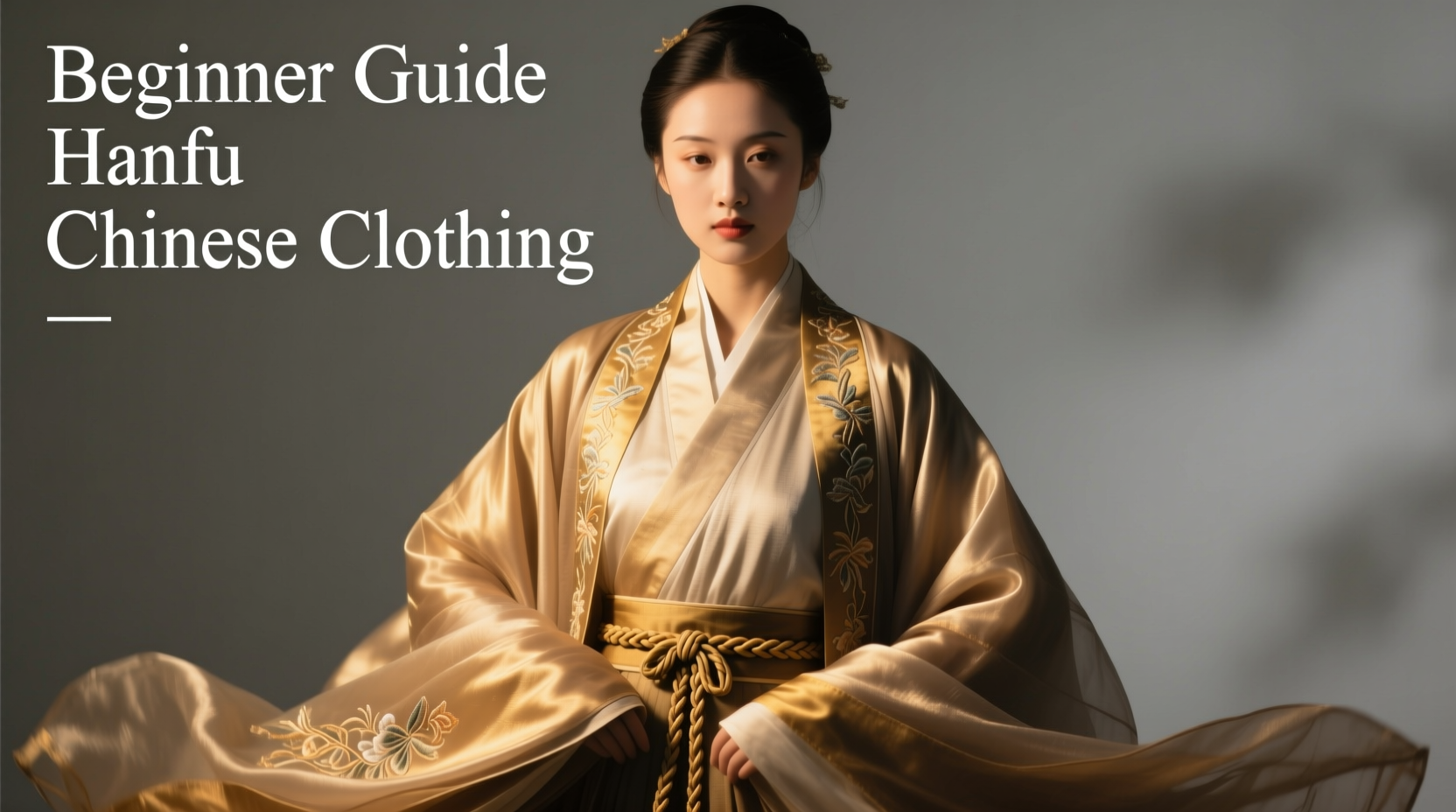
For over three millennia, the sartorial landscape of China was defined by a flowing, elegant, and deeply symbolic system of dress. Today, a global cultural renaissance has brought hanfu traditional chinese clothing back into the spotlight. Far from being a mere historical costume or theatrical prop, hanfu (汉服) is the ancestral dress of the Han ethnic group, representing a living tradition that connects modern wearers to ancient philosophies, aesthetics, and craftsmanship.
Whether you are drawn to the sweeping sleeves of the Tang dynasty or the structured pleats of the Ming, navigating the world of hanfu can feel overwhelming for a newcomer. This comprehensive beginner’s guide breaks down the anatomy, historical silhouettes, and practical buying advice you need to start your hanfu journey with cultural respect and confidence.
What Defines Hanfu? The Core Anatomy of the Garment
Unlike Western tailoring, which relies on darts, seams, and buttons to contour the body, traditional hanfu is cut from flat panels of fabric, emphasizing drape, movement, and the concealment of the body's physical shape. While styles evolved across dynasties, authentic hanfu shares several non-negotiable anatomical features:
- Jiaoling Youren (交领右衽): The cross-collar, right-lapel closure. The left side of the collar crosses over the right, forming a 'y' shape at the neckline. This is deeply rooted in Chinese cosmology, where the left (Yang/life) supersedes the right (Yin/death). Reversing this (Zuoren, or left-lapel) was historically reserved for the deceased or considered a sign of barbarism.
- Baoxiu (褒袖): Wide, flowing sleeves. While working-class garments featured narrower cuffs for practicality, formal and scholarly hanfu utilized expansive sleeves that could even serve as hidden pockets.
- Yindai (隐带): Hidden ties. Traditional hanfu rarely uses buttons or zippers. Instead, garments are secured using internal and external fabric ties, allowing for adjustable sizing and a seamless exterior aesthetic.
- Zhongfeng (中缝): The center back seam. Because ancient looms produced narrow widths of fabric, a vertical seam runs down the exact center of the back, symbolizing uprightness, integrity, and moral rectitude.
Three Primary Silhouettes Every Beginner Should Know
The term 'hanfu' encompasses hundreds of variations, but most beginner-friendly styles fall into three foundational categories.
1. Ruqun (襦裙) - The Classic Top-and-Skirt
The Ruqun consists of a short top (Ru) and a wrap-around skirt (Qun). It is one of the oldest and most enduring silhouettes. During the Tang Dynasty (618–907 CE), women popularized the Qixiong Ruqun (chest-high skirt), where the skirt is tied above the bust, creating a statuesque, flowing silhouette that reflected the era's cosmopolitan confidence and wealth. In contrast, the Song Dynasty (960–1279 CE) favored the Jiaoling Ruqun, tied at the natural waist, reflecting a more modest, slender, and intellectual aesthetic.
2. Shenyi (深衣) - The Deep Robe
The Shenyi is a full-body robe that conceptually separates the top and bottom but sews them together into a single garment. Historically worn by scholars and officials, it adheres strictly to Confucian rites. The cuffs are often rounded to symbolize heaven, while the collar is squared to symbolize earth, embodying the ancient Chinese worldview of a round heaven and a square earth.
3. Aoqun (袄裙) and the Mamianqun
Dominating the Ming Dynasty (1368–1644 CE), the Aoqun features a longer, lined jacket (Ao) worn over a skirt. The most iconic skirt from this era is the Mamianqun (horse-face skirt). Characterized by flat, unpleated front and back panels with heavily pleated sides, the Mamianqun was originally designed for ease of movement while horseback riding. Today, it is the most popular entry-point for modern hanfu enthusiasts due to its versatility; it can be elegantly paired with a traditional Ming jacket or a modern cashmere sweater.
Hanfu vs. Qipao vs. Tang Suit: Clearing Up the Confusion
A common misconception in the West is conflating all Chinese traditional dress. Understanding the distinction is vital for cultural accuracy.
| Garment | Historical Origin | Key Characteristics | Cultural Context |
|---|---|---|---|
| Hanfu | Antiquity to 1644 CE (Qing Dynasty transition) | Cross-collars, wide sleeves, flat-cut panels, fabric ties. | Ancestral dress of the Han ethnic majority; tied to ancient philosophy and rites. |
| Qipao (Cheongsam) | 1920s Shanghai (Republic of Era) | Form-fitting, high Mandarin collar, frog buttons, side slits. | Modernized urban fashion of the 1920s-30s; reflects Western tailoring influences. |
| Tang Suit | Late Qing Dynasty / Modern (19th-20th Century) | Jacket with a Mandarin collar, symmetrical frog closures, Manchu origins. | Often worn during Lunar New Year or by political leaders at international summits. |
As noted by the Metropolitan Museum of Art's Heilbrunn Timeline of Art History, the transition from the wide, flowing robes of the Ming Dynasty to the Manchu-influenced garments of the Qing Dynasty (which eventually birthed the Qipao and Tang Suit) represents a massive shift in Chinese sartorial history. Hanfu specifically refers to the pre-Qing traditions.
Fabric, Motifs, and Color Symbolism
Historically, fabric choice dictated social class. While royalty and nobility wore heavy silk brocades (Zhuanghua) and delicate gauzes (Luo), commoners were restricted to rough hemp, ramie, and later, cotton. Today, modern hanfu utilizes a spectrum of materials:
- Spring/Summer: Linen, cotton, and silk chiffon (Xuefang) for breathability and ethereal movement.
- Autumn/Winter: Heavy silk brocade, velvet, wool blends, and lined cotton for warmth and structural drape.
Color and motifs are never accidental. In traditional Chinese color theory (Wuxing), yellow was strictly reserved for the Emperor. Red symbolizes joy, vitality, and warding off evil, making it ubiquitous for weddings and the Lunar New Year. Blue and green are associated with scholars, spring, and the wood element. Motifs like the peony (wealth), the crane (longevity), and the lotus (purity) are woven directly into the fabric or embroidered along the hems and collars.
How to Buy Your First Hanfu: Price Ranges and Sizing
Purchasing authentic hanfu requires understanding the market, which is heavily driven by specialized Chinese e-commerce platforms like Taobao, though overseas boutiques are increasingly accessible. Here is a practical pricing framework for beginners:
1. Entry-Level (Daily Wear & Festivals)
- Price Range: $30 – $70 USD (150 – 450 RMB)
- Materials: Polyester blends, cotton, synthetic chiffon.
- Best For: First-time buyers, casual street wear, cultural festivals, and travel. These are easy to machine wash and maintain.
2. Mid-Tier (Enthusiast & Historical Accuracy)
- Price Range: $80 – $250 USD (500 – 1,500 RMB)
- Materials: Mulberry silk, linen, rayon blends, woven jacquard.
- Best For: Formal events, tea ceremonies, and photography. The drape is significantly better, and the patterns are historically accurate reproductions often sourced from museum archives.
3. High-End Couture (Heirloom & Custom)
- Price Range: $300 – $1,500+ USD (2,000 – 10,000+ RMB)
- Materials: Hand-embroidered silk, genuine gold-thread weaving (Zijin), intangible cultural heritage techniques.
- Best For: Collectors, traditional weddings, and ceremonial rites.
Sizing Tip: Unlike Western clothing, hanfu is largely one-size-fits-most due to the wrap-around nature of the skirts and the tie closures. However, you must measure your Xiongwei (bust/chest) and Yaozwei (waist) to ensure the cross-collar closes properly without gaping, and check the skirt length so it grazes your ankles without dragging on the floor.
Cultural Etiquette and the Modern Hanfu Movement
The modern Hanfu Yundong (Hanfu Movement) began in the early 2000s, spearheaded by youth seeking to reclaim their cultural identity in a rapidly globalizing world. What started as a niche internet forum discussion has exploded into a multi-billion-dollar industry, with millions of young people wearing hanfu on the subway, in universities, and at cafes.
"Hanfu is not a cosplay of the past; it is the sartorial vocabulary of our ancestors, adapted for the modern voice." — Contemporary Hanfu Movement Proverb
When wearing hanfu, etiquette is just as important as the garment itself. Always ensure your collar is crossed correctly (left over right). Keep your posture upright to honor the Zhongfeng (center seam). When sitting, gently gather the wide sleeves to avoid knocking over tea cups or dragging them in food.
Institutions like the China National Silk Museum in Hangzhou have been instrumental in this revival, hosting exhibitions that allow modern artisans to study ancient textile fragments, ensuring that the brocades and weaves produced today are historically faithful. Similarly, the Victoria and Albert Museum's Asian collections provide vital archival access to Ming and Qing-era textiles, bridging the gap between historical preservation and modern reproduction.
Embracing hanfu traditional Chinese clothing is an invitation to slow down. It is a practice of wearing history on your sleeves, quite literally, and stepping into a continuum of elegance that has survived empires, revolutions, and the test of time.