Aoqun Hanfu Guide: Regional Variations and Historical Substyles

The Anatomy of the Aoqun: Beyond the Basic Silhouette
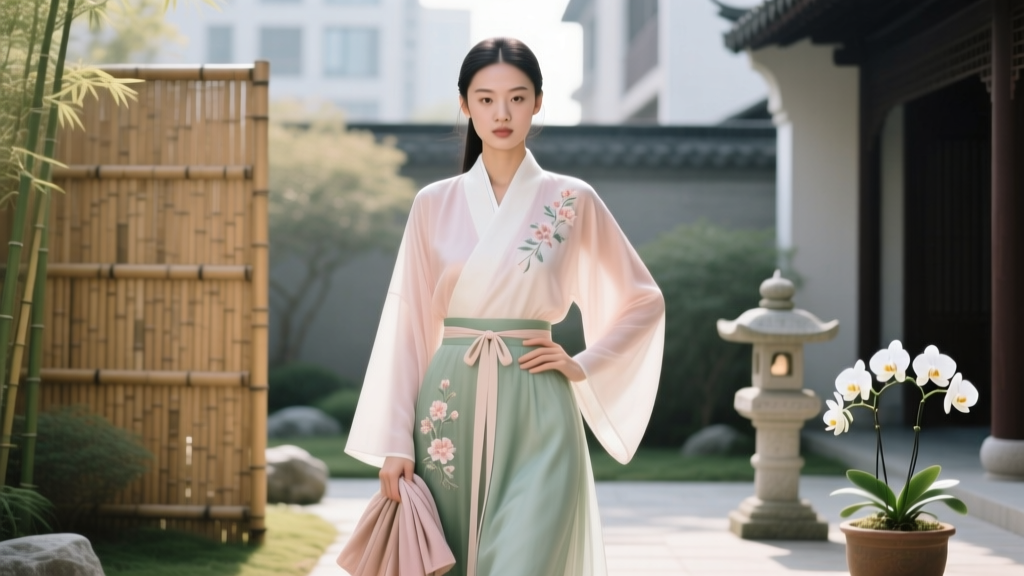
The aoqun (袄裙) represents one of the most structurally complex, historically significant, and visually striking silhouettes in the Hanfu canon. Translating literally to "jacket and skirt," the aoqun is frequently confused by novices with the ruqun (襦裙). However, the distinction is vital for cultural accuracy and historical authenticity: while a ru is a lightweight, unlined, single-layer shirt worn in warmer months, the ao is a lined, layered, or padded jacket designed for structure, warmth, and formal presentation. The aoqun reached its zenith during the Ming Dynasty (1368–1644), evolving into a garment that communicated social status, regional wealth, and meticulous artisanal craftsmanship.
The Ao (Jacket): Collars, Sleeves, and Lining
The construction of the ao is defined by its three-dimensional tailoring, a departure from the flatter, more fluid draping of earlier Han dynasty garments. The most iconic sleeve style associated with the Ming aoqun is the pipa xiu (琵琶袖), or pipa sleeve. Named after the traditional Chinese lute, this sleeve features a dramatic curve: it is narrow at the shoulder, expands significantly at the elbow to allow for freedom of movement and the concealment of small personal items, and tapers back into a fitted cuff at the wrist. This cuff, known as the xiukou, was often heavily embroidered with auspicious motifs.
Collar variations also define specific aoqun substyles. The jiaoling (cross-collar) remains the most ubiquitous, adhering to the strict jiaoling youren (left over right) rule that signifies the wearer's participation in civilized society. However, the late Ming period introduced the liling (stand-up collar), fastened with intricate metal buttons known as zikou. These interlocking gold, silver, or jade buttons were not merely functional; they were highly prized indicators of a family's economic standing.
The Qun (Skirt): Pleats, Panels, and the Mamianqun
While the aoqun can be paired with various skirt styles, its most enduring partner is the mamianqun (马面裙), or horse-face skirt. According to textile archives at the China National Silk Museum, the mamianqun was originally engineered for equestrian mobility before being adapted for courtly and civilian wear. Its construction is a marvel of traditional geometry: the skirt consists of two overlapping, flat, unpleated front and back panels (the "horse faces"), flanked by heavily pleated side panels. This overlapping structure ensures modesty and prevents the skirt from falling open during movement, while the side pleats provide a sweeping, voluminous silhouette when the wearer walks.
Chronological and Regional Substyles of the Aoqun
The aoqun is not a monolith; it shifted dramatically across centuries and geographies. Understanding these substyles is crucial for collectors, historians, and modern Hanfu enthusiasts seeking historical accuracy.
Song Dynasty Minimalism vs. Ming Dynasty Opulence
The Song Dynasty (960–1279) aoqun favored intellectual minimalism and understated elegance. Song-era jackets were generally shorter, with narrower, straight sleeves, reflecting the Neo-Confucian emphasis on restraint. The skirts were often baiyinqun (hundred-pleat skirts) made from lightweight silks in muted, earthy tones like celadon, ochre, and pale plum. In stark contrast, the Ming Dynasty aoqun embraced opulence. Jackets grew longer, often extending past the hips to cover the waistband of the skirt, and were crafted from heavy brocades woven with gold and silver threads (zhuanghua). The Ming silhouette was deliberately imposing, designed to project the stability and wealth of a reunified empire.
Late Ming Stand-Up Collars and the Transition to Qing
As the Ming Dynasty progressed into the 16th and 17th centuries, a distinct regional substyle emerged in the affluent Jiangnan region (south of the Yangtze River). Here, the liling ao (stand-up collar jacket) became the height of fashion among elite women. The high collar protected the neck from the damp cold of southern winters and provided a canvas for elaborate zikou buttons. When the Qing Dynasty (1644–1912) mandated Manchu dress codes, the Han Chinese aoqun survived in modified forms, eventually evolving into the early Republican-era aoqun that directly preceded the modern qipao.
Modern Manufacturing Hubs: Where to Source Authentic Aoqun
The contemporary Hanfu revival has transformed the aoqun from a museum artifact into a living, breathing garment. However, the quality, fabric composition, and price of a modern aoqun depend entirely on its regional manufacturing hub. Buyers must navigate these distinct production centers to find garments that match their budget and historical standards.
| Manufacturing Hub | Regional Specialty & Fabric Focus | Price Range (USD) | Best Suited For |
|---|---|---|---|
| Caoxian (Shandong) | Mass-market production; polyester jacquards, printed chiffons, and blended synthetics. Fast turnaround times. | $40 – $90 | Beginners, cosplay, festival wear, and budget-conscious buyers. |
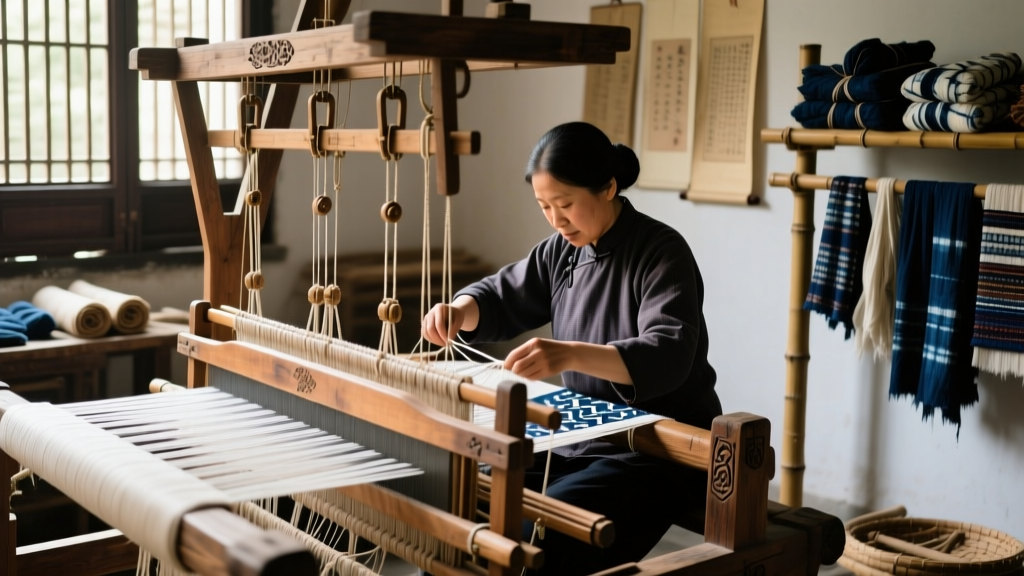
| Hangzhou & Suzhou (Zhejiang/Jiangsu) | Artisanal silk weaving; authentic Song brocade (songjin), mulberry silk, and hand-embroidered pipa sleeves. | $180 – $600+ | Historical accuracy, formal events, textile collectors, and luxury gifting. |
| Guangzhou (Guangdong) | Modernized daily wear; breathable linens, gambiered Canton gauze (xiangyunsha), and contemporary tailored fits. | $90 – $250 | Daily summer wear, modern office styling, and humid climates. |
Fabric Composition and Seasonal Protocols
Because the ao is inherently a lined or padded garment, fabric selection is deeply tied to seasonal protocols. In traditional Chinese dress culture, wearing the incorrect weight of fabric for a given season was considered a breach of etiquette.
- Spring/Autumn (Jia Ao): The jia ao is a lined jacket with no padding. The exterior is typically woven from songjin (Song brocade) or heavy crepe silk, while the lining is made of soft, breathable habotai silk. This provides structure without overheating the wearer.
- Winter (Mian Ao): The mian ao is padded with cotton, silk floss, or modern synthetic down. Historical records from The Palace Museum in Beijing show that imperial winter aoqun were often lined with rabbit or fox fur, though modern ethical revivals strictly utilize high-grade cotton batting or cruelty-free thermal linings.
- Summer (Shan Ao): While technically an aoqun is meant for cooler weather, the modern revival has birthed the shan ao—a single-layer, sheer jacket made from xiangyunsha (gambiered Canton gauze) or lightweight organza, allowing the aoqun silhouette to be worn in high heat.
"The structural integrity of the Ming Dynasty aoqun relies heavily on the tension between the heavy, woven brocade of the jacket and the precise, mathematical pleating of the mamianqun. To alter the fabric weight without adjusting the pleat depth results in a complete collapse of the historical silhouette."
— Curatorial notes on Ming Dynasty Textile Conservation, The Metropolitan Museum of Art Asian Art Department.
Styling and Cultural Etiquette for the Modern Wearer
Wearing an aoqun today requires an understanding of proportion and cultural respect. The most common mistake made by modern wearers is improper waistband placement. The mamianqun should be worn at the natural waist or slightly above, never on the hips. The waistband of the skirt must be completely concealed beneath the hem of the ao jacket. If the jacket is too short and the skirt's waistband is exposed, the outfit loses its historical dignity and structural logic.
Furthermore, the length of the skirt should ideally hover just above the ankle bone, allowing for elegant movement without the risk of the hem dragging on the ground and collecting dirt—a practical consideration that has remained unchanged since the Ming Dynasty. When accessorizing, avoid mixing the aoqun with non-traditional modern footwear like chunky sneakers; instead, opt for traditional yunjian (cloud-tip shoes) or minimalist, flat leather loafers that respect the garment's grounded, sweeping hemline. By honoring these regional variations, historical substyles, and structural rules, wearers do more than just put on a costume; they participate in the living continuity of Asian sartorial heritage.