Zapotec Rug Weaving of Oaxaca Mexico

A Village That Weaves
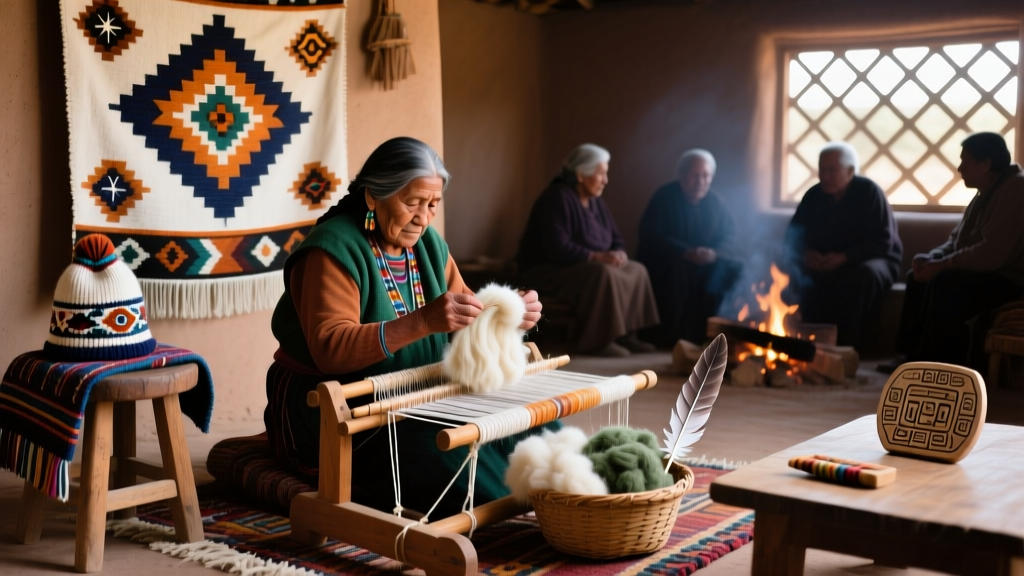
Teotitlan del Valle in Oaxaca has been a textile center for over two thousand years. Today it is known for Zapotec wool rugs, handwoven on treadle looms introduced by the Spanish but incorporating indigenous design traditions. Nearly every household maintains a loom, with children often beginning to weave by age eight.
The Dye Tradition
Zapotec rugs are distinguished by commitment to natural dyes, particularly cochineal: brilliant red from Dactylopius coccus insects living on prickly pear cacti. Cochineal was one of colonial Mexico's most valuable exports. Weavers also use indigo (blue), marigold (yellow), pecan shells (brown), and huizache pods (black).
- Cochineal: brilliant red from cactus insects
- Indigo: deep blue from fermented leaves
- Marigold: warm yellow-orange
- Pecan shell: rich brown tones
- Huizache: deep black from seed pods
Design Vocabulary
Designs range from geometric patterns (diamonds, zigzags, stepped greca frets) to representational flora and fauna. The greca pattern echoes architectural motifs at nearby Mitla, the ancient Zapotec religious center. The diamond represents four cardinal directions, zigzag represents lightning and rain.
Challenges and Continuity
The industry faces machine-made imitations. Genuine rugs are identifiable by natural dye colors, handwoven irregularities, and the weaver's signature. Cooperatives and fair-trade organizations help access international markets at fair prices.