Navajo Weaving: Spider Woman's Gift
Introduction
In Navajo cosmology, Spider Woman (Na'ashjeii Asdzaa) taught the Diné people to weave. This creation story frames Navajo textile art as a sacred practice — every rug carries a spiritual dimension that transcends its material value.
The Upright Loom Tradition
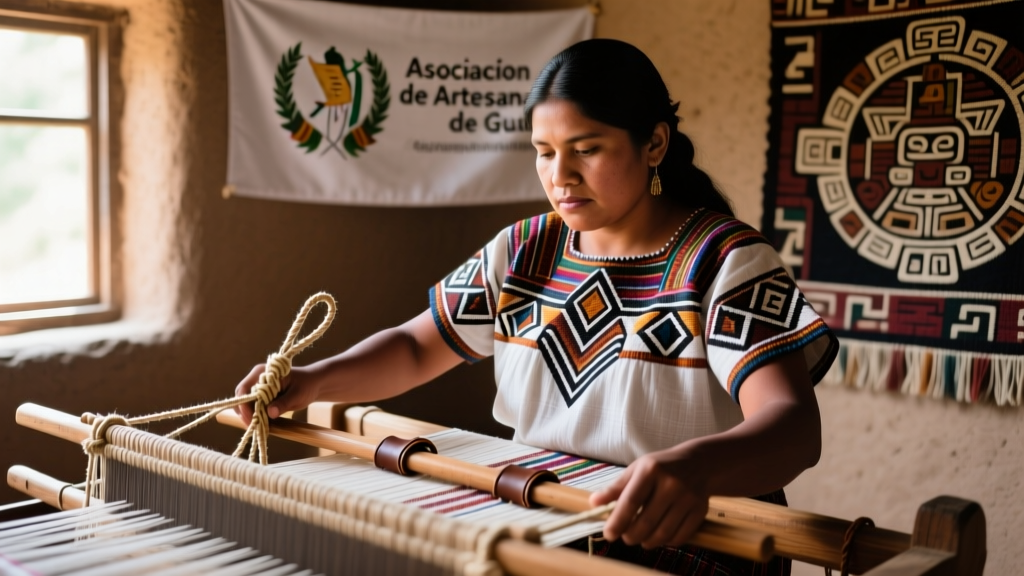
Navajo weavers use an upright frame loom, a technology adapted from Pueblo neighbors in the 17th century. The warp is continuous (no cut ends), and weavers work from bottom to top, building the design row by row. A single rug can take months of daily work.
Regional Styles
Trading posts in the late 19th century helped develop distinct regional styles:
- Two Grey Hills: natural wool colors, complex geometric borders
- Ganado: deep red backgrounds with bold black and white patterns
- Chinle: banded horizontal stripes in vegetal-dyed colors
- Wide Ruins: borderless designs with earth-tone horizontal bands
- Teec Nos Pos: the most complex, with multiple pattern layers
The Spirit Line (Ch'ihónít'i')
Many Navajo weavers include a deliberate "spirit line" — a thin pathway woven from the center of the design to the edge. This line provides an exit route for the weaver's spirit, which might otherwise become trapped in the intricate pattern. It reflects the Navajo principle of hózhó (balance and harmony).
Conclusion
Navajo weaving continues to evolve while honoring its spiritual roots. Contemporary weavers like Marilou Schultz push boundaries with abstract designs while maintaining the technical excellence passed down through generations.