Navajo Weaving: Blankets That Tell Stories

Navajo Weaving: Blankets That Tell Stories
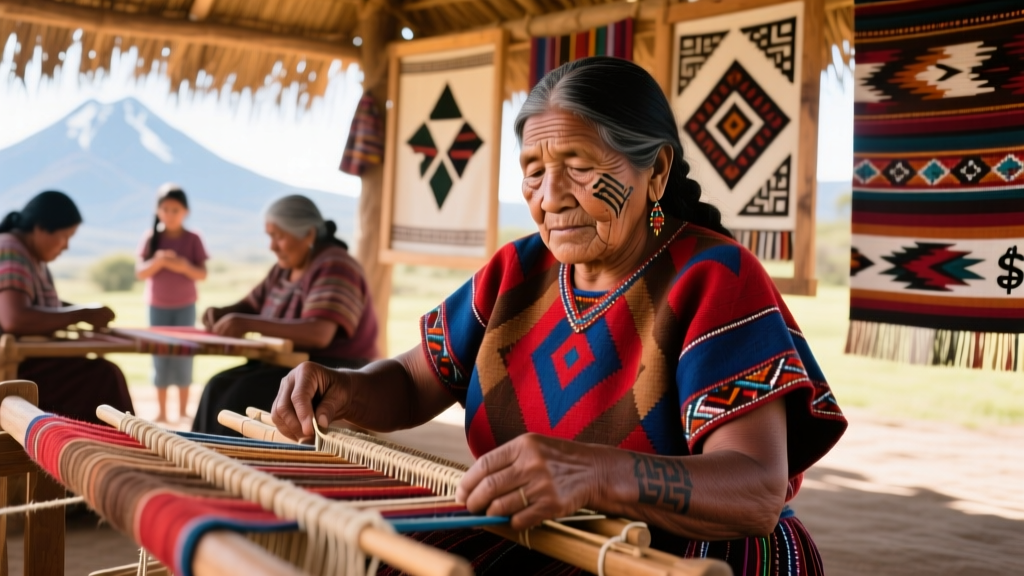
Navajo weaving is one of the most celebrated textile traditions in North America. For the Diné (Navajo) people, weaving is not merely a craft but a sacred practice with deep spiritual roots. Each blanket, rug, and garment carries layers of meaning that connect the weaver to the land, the ancestors, and the cosmic order.
Spiritual Origins
According to Navajo creation stories, Spider Woman (Na'ashjé'ii Asdzáá) taught the Diné the art of weaving. The loom was constructed with tools given by the Holy People: the cross poles were made of sky and earth cords, the warp sticks of sun rays, and the batten of a sun halo. This sacred origin means that every act of weaving is a reenactment of creation.
Historical Periods
Classic Period (1650-1865)
Early Navajo textiles were primarily wearing blankets, made from the wool of Churro sheep introduced by Spanish colonists. These blankets featured simple banded designs in natural wool colors — white, brown, and black — supplemented with indigo blue and raveled red yarn from traded bayeta cloth.
Transitional Period (1865-1895)
Following the devastating Long Walk and internment at Bosque Redondo, Navajo weaving shifted from blankets to rugs, responding to the growing tourist and trading post market. Aniline dyes introduced bright reds, oranges, and greens.
Regional Style Period (1895-present)
Trading posts fostered distinct regional styles: Two Grey Hills (natural wool, geometric), Ganado (deep red backgrounds), Wide Ruins (banded earth tones), and Crystal (bold vegetal-dyed patterns).
Spirit Line
Many Navajo weavers incorporate a spirit line (ch'ihónít'i') — a thin line extending from the center design to the edge of the textile. This pathway allows the weaver's spirit to escape the design, preventing the weaver from becoming trapped within their own creation and ensuring they can weave again.