Mapuche Textile and Silverwork: Chilean Heritage
Weavers of the Southern Andes
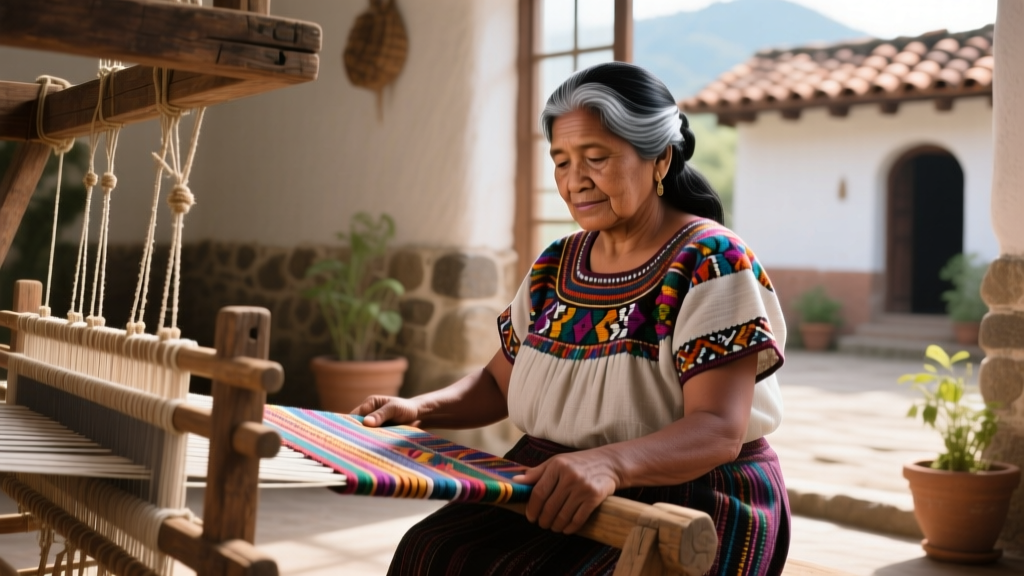
The Mapuche people of southern Chile and Argentina have maintained a rich textile tradition for centuries. Mapuche women are the primary weavers, creating ponchos, belts, and blankets on vertical looms using techniques passed down through generations.
Textile Patterns
Mapuche textiles feature geometric designs with deep symbolic meaning. The guemil pattern (interlocking stepped diamonds) represents the path of life. The llague (cross) symbolizes the four cardinal directions. Colors carry meaning: red represents the earth, black the spiritual world, and blue the sky and water.
Silverwork Tradition
Mapuche silverwork (rutran) is among the most distinctive metalwork traditions in the Americas. Large silver breastplates (trapelakucha), headbands (trarilonko), and breast ornaments (sikil) were worn by women as markers of social status. Each piece was individually crafted by a specialist silversmith (rutrafe).
Cultural Continuity
Despite centuries of colonization, Mapuche textile and silverwork traditions continue. Cultural revitalization programs teach young Mapuche women traditional weaving techniques, while contemporary Mapuche designers incorporate traditional patterns into modern fashion and accessories.