Lakota Regalia: Beadwork & Symbolism

Lakota Regalia: Beadwork & Symbolism
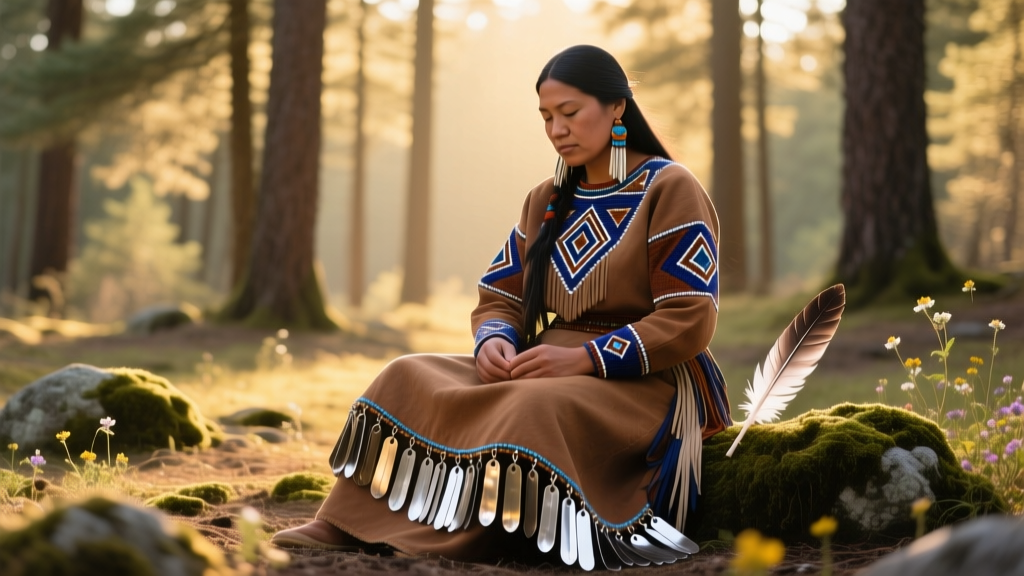
Lakota regalia is among the most artistically sophisticated and spiritually significant clothing traditions in North America. Far from decorative costume, each element of Lakota dress — from beaded moccasins to feathered headdresses — carries profound cultural meaning, connecting the wearer to the sacred circle of life, the natural world, and ancestral memory.
The Art of Beadwork
Before European contact, Lakota artisans decorated garments with porcupine quillwork, an ancient technique of flattening, dyeing, and weaving quills into geometric patterns. Glass seed beads introduced through trade gradually supplemented quillwork, allowing for finer detail and broader color palettes. Today, both traditions coexist, with master quillworkers preserving the older art.
The Lazy Stitch Technique
Lakota beadwork is characterized by the lazy stitch (also called lane stitch), where beads are strung and laid in parallel rows, creating distinctive ribbed bands of geometric design. This technique produces the bold, angular patterns seen on pipe bags, cradleboards, and ceremonial vests. Each color and pattern carries specific meaning.
Color Symbolism
- Red: Life, blood, the earth, and the sacred direction south
- Yellow: The sun, enlightenment, and the east
- Black: The west, the thunder beings, and victory
- White: Purity, the north, and the breath of life
- Blue: The sky, the spirits, and the direction upward
The Warbonnet
The eagle feather warbonnet is perhaps the most recognized symbol of Plains Indian culture. Each feather represents a deed of valor or act of service to the community. Only those who have earned the right through demonstrated leadership and bravery may wear one. The trailer-style warbonnet, with feathers cascading to the ground, was specifically a Lakota innovation.
Living Tradition
Today, Lakota regalia makers continue to create extraordinary beaded and quilled garments for powwows, ceremonies, and daily life. Young artists learn from elders, and contemporary Lakota designers incorporate traditional motifs into modern fashion, ensuring that these powerful visual languages continue to speak across generations.