Nigerian Adire: Indigo Resist Dyeing

Blue Gold of the Yoruba
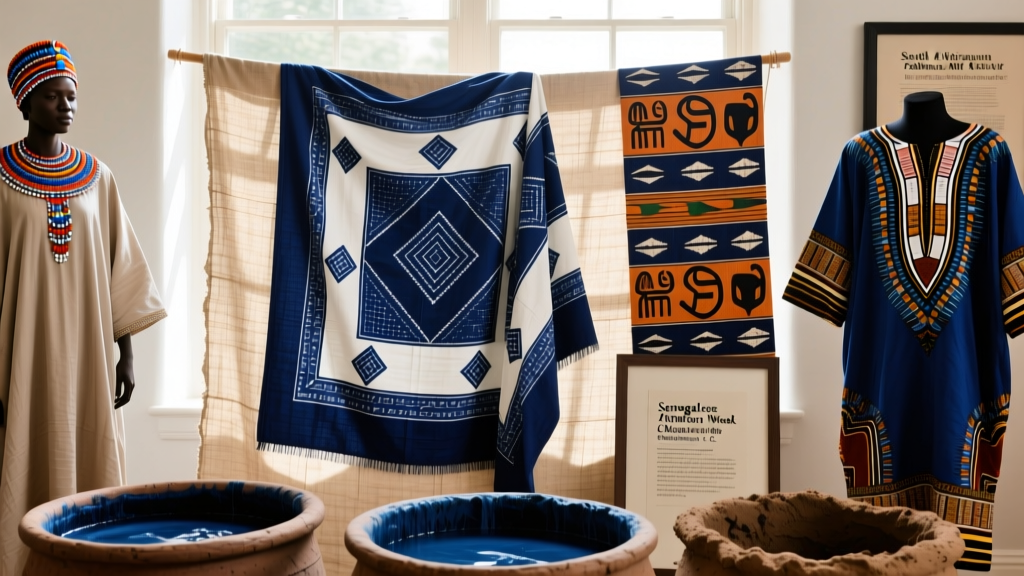
Adire (meaning "tie and dye" in Yoruba) is a centuries-old indigo resist-dyeing tradition practiced primarily by Yoruba women in southwestern Nigeria. The city of Abeokuta, capital of Ogun State, has been the epicenter of adire production since the 19th century, when Yoruba refugees brought the technique from their former settlements.
Two Main Techniques
Adire encompasses two primary resist methods: adire onoko (tied resist), where fabric is pleated, bound, and dipped in indigo, creating striped or circular patterns; and adire eleko (starch resist), where cassava starch paste is applied through metal stencils or freehand with feathers and combs to create intricate geometric and figurative designs.
Indigo Preparation
Traditional adire uses indigo from Lonchocarpus cyanescens leaves, fermented in large clay pots with wood ash lye. The dye vat must be carefully maintained over weeks to develop the correct chemical conditions. Multiple dips — sometimes 20 or more — are required to achieve the deep, dark blue that characterizes high-quality adire cloth.
Pattern Vocabulary
Adire eleko patterns form a rich visual language: the "Ibadandun" pattern (joy of Ibadan) features alternating pillars and arches; "Olokun" depicts the sea deity with wave-like patterns; "Jubilee" commemorates specific historical events. Each pattern has a name and story, making adire cloth a form of visual communication.
Contemporary Challenges
Cheap imported fabrics and synthetic indigo have threatened traditional adire production. However, Nigerian designers and international fashion houses have sparked renewed interest, with adire cloth appearing on global runways. Cooperatives in Abeokuta continue training new dyers, ensuring this UNESCO-recognized tradition endures.