Kente Cloth: Ghana's Royal Fabric
Introduction
Kente is Ghana's most recognized textile — a strip-woven fabric of extraordinary complexity that originated as royal cloth for Ashanti kings. Today it symbolizes African heritage worldwide, but its deepest meanings remain rooted in Akan philosophy.
Strip Weaving Technique
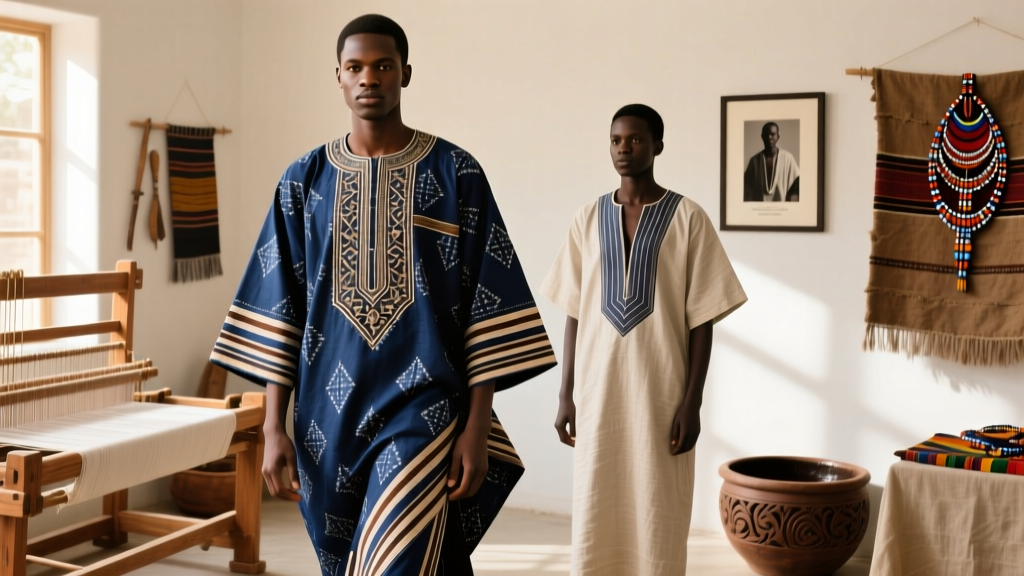
Kente is woven in narrow strips (about 10cm wide) on a double-heddle loom operated by men. Each strip contains a sequence of pattern blocks, and multiple strips are sewn together edge-to-edge to form the complete cloth. A full-size kente requires 20-24 strips and months of weaving.
Named Patterns with Proverbial Meaning
Each kente pattern has a specific name and associated proverb:
- Sika Futuro (gold dust): wealth and royalty
- Emaa Da (something new): creativity and innovation
- Fathia Fata Nkrumah: political unity (named after Nkrumah's Egyptian wife)
- Adweneasa (my skill is exhausted): mastery and humility
- Abusa Ye Dom (three is a crowd): community dynamics
Color Symbolism
Kente colors carry specific meanings: gold represents royalty and wealth, green for growth and spiritual renewal, blue for harmony and love, red for political passion and sacrifice, black for maturity and spiritual energy, and white for purification and festive occasions.
Conclusion
Authentic hand-woven kente from Bonwire and Adanwomase villages remains highly valued. While printed imitations flood markets, master weavers continue producing cloths that take months to complete and carry centuries of accumulated meaning.