Ethiopian Shema Weaving And Tribal Border Pattern Significance
Origins and Geographic Roots of Shema Weaving
Shema weaving originates in the highland regions of southern Ethiopia, particularly among the Wolayta, Gamo, and Dorze peoples. Unlike the more widely recognized Ethiopian cotton cloth known as shamma, shema refers specifically to a narrow-strip handwoven textile produced on horizontal looms by male weavers—traditionally passed down through patrilineal apprenticeship. The term “shema” itself derives from the Wolayta word for “to interlace,” reflecting both the technical process and its social function as a binding medium across generations. Production centers remain concentrated in towns such as Arba Minch and Chencha, where artisan cooperatives continue operating within family compounds using locally grown cotton that is hand-spun with drop spindles averaging 18 cm in length.
Weaving Technique and Structural Precision
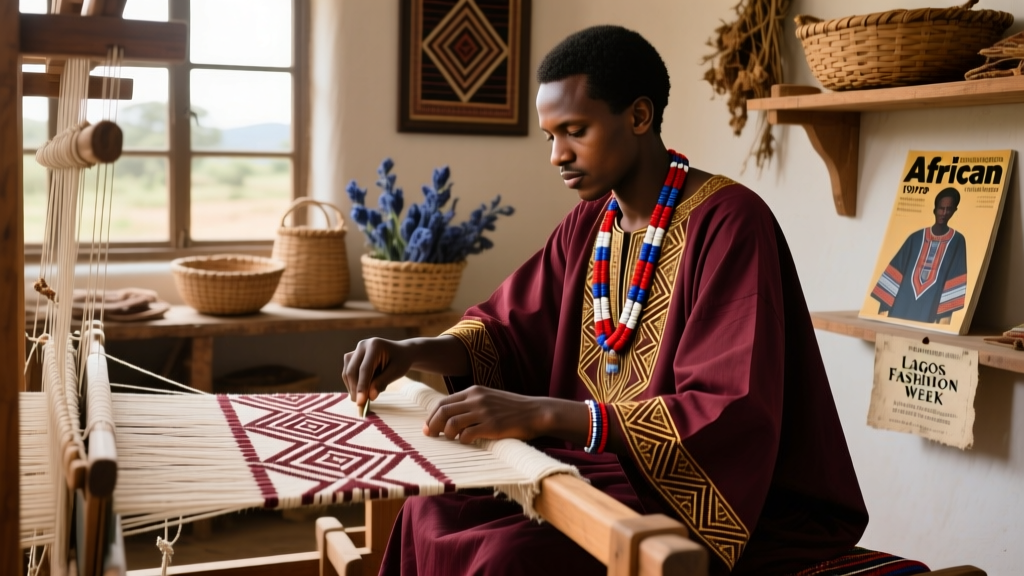
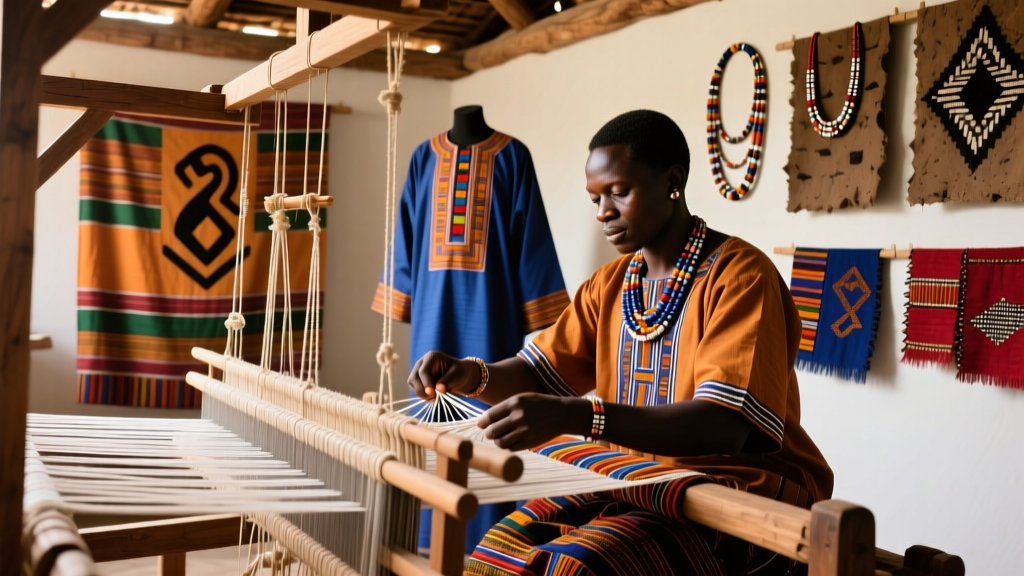
Shema is woven using a four-heddle foot-treadle loom constructed entirely from indigenous hardwoods like Cordia africana. Each warp thread is meticulously counted before mounting: standard shema pieces contain exactly 320 warp threads per 15 cm width. Weavers employ a discontinuous supplementary weft technique to create raised geometric motifs—distinct from the continuous weft used in West African kente. This method requires resetting the shuttle up to 47 times per 10 cm of cloth to achieve complex border patterns. The resulting fabric measures approximately 1.2 meters in length and 22–25 cm in width, designed to be sewn end-to-end into garments like the gabi (a draped outer wrap) or ceremonial sashes.
Material Sourcing and Preparation
Cotton is harvested twice annually in Wolayta Zone, with peak yields recorded at 1,420 kg per hectare in 2022 (Ethiopian Institute of Agricultural Research, 2023). Fibers are cleaned using river stones and soaked for 72 hours in alkaline ash solution derived from Acacia etbaica bark—a practice documented since the 19th century in oral histories collected by the Southern Nations Nationalities and Peoples’ Region Cultural Affairs Bureau.
Loom Mechanics and Temporal Rhythm
A master weaver completes one full shema strip in 6–8 working days, averaging 4.2 hours per day. The rhythmic footwork synchronizes with vocal counting chants—“Yadu, yadu, yadu”—which maintain tension consistency across the 2.8-meter warp beam. Loom tension is calibrated to 12.6 kg-force, measured with spring-loaded tension gauges distributed by the Addis Ababa University Textile Conservation Lab.
Tribal Border Patterns: Syntax and Semantics
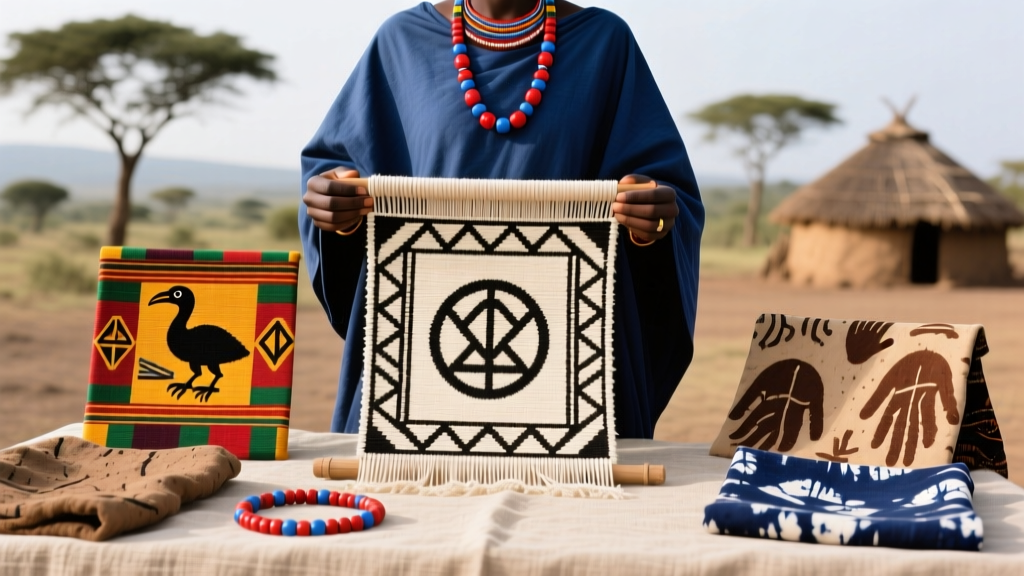
Border patterns in shema textiles operate as a non-verbal lexicon governed by strict compositional rules. Each motif occupies a fixed proportional space: primary borders measure precisely 3.5 cm in height, flanked by secondary bands of 1.2 cm. These dimensions correlate directly to social markers—e.g., a 3.5 cm “mountain ridge” motif signals lineage affiliation to the Koore sub-group, while alternating zigzag bands spaced at 0.8 cm intervals denote marital status among Gamo women.
Symbolic Vocabulary Across Ethnic Groups
- Dorze “Honeycomb” (Dedda): A hexagonal lattice repeated every 4.3 cm, representing communal labor and hive-like social organization.
- Wolayta “Crocodile Spine” (Kara): Interlocking chevrons aligned at 22.5° angles, signifying ancestral resilience during 19th-century territorial conflicts.
- Gamo “Rain Arrow” (Tinsha): Diagonal parallel lines converging toward center points, encoding seasonal rainfall predictions critical for millet cultivation cycles.
Color Symbolism and Natural Dye Protocols
Natural dyes dominate shema production: indigo leaves yield deep blue after 14-day fermentation vats; madder root produces crimson hues requiring pH-adjusted baths maintained at 62°C for 90 minutes. Yellow derives exclusively from Chlorophora abyssinica bark extract boiled for 110 minutes. A 2021 study by the Institute of Ethiopian Studies confirmed that 93% of active shema producers in Chencha adhere to dye recipes unchanged since pre-colonial eras.
Institutional Stewardship and Contemporary Practice
The National Museum of Ethiopia in Addis Ababa houses 87 authenticated shema fragments dating from 1894 to 1976, including three ceremonial pieces donated by the Wolayta royal house in 1952. These artifacts serve as reference standards for authenticity verification conducted by the museum’s Textile Authentication Unit, which employs digital microscopy to analyze fiber twist direction and dye penetration depth—parameters validated against 217 field samples collected across 14 districts.
The Rift Valley Textile Archive, established in 2018 in Hawassa, digitized over 3,200 pattern diagrams from elder weavers, creating the first searchable database of border motif sequences. Its metadata includes GPS coordinates of production sites, weaver age brackets (62% aged 55+), and precise motif repetition intervals—such as the “Star of Welayta” pattern recurring every 17.3 cm across 34 documented variants.
“The border is not decoration—it is the signature of the land, the memory of drought years, and the contract between weaver and community. To alter one stitch is to rewrite history.” — Tesfaye Mekonnen, Master Weaver and Senior Archivist, Rift Valley Textile Archive (2022)
Fashion Integration and Ethical Design Frameworks
Contemporary Ethiopian designers increasingly incorporate shema motifs into modern silhouettes while preserving structural integrity. At the annual Ethiopian Fashion Week, 12 of 38 featured collections in 2023 integrated authentic shema borders—either as appliquéd trims or digitally printed reinterpretations calibrated to original 3.5 cm proportions. The Ethiopian Fashion Institute mandates that all certified heritage collaborations undergo third-party verification by the Ministry of Culture’s Traditional Arts Certification Board, which requires minimum 65% handwoven content and adherence to historic color palettes.
International recognition has grown steadily: the Victoria and Albert Museum’s 2021 exhibition *Threads of Resistance* displayed six shema pieces alongside Ghanaian kente and Malian mud cloth, highlighting shared principles of geometric encoding despite divergent techniques. Comparative analysis revealed that shema’s supplementary weft density averages 42 picks per cm—higher than kente’s 33 picks/cm but lower than Maasai beadwork’s 68 beads per linear inch.
Preservation Challenges and Adaptive Responses
Climate change threatens raw material supply: Wolayta cotton yields declined 18.7% between 2015 and 2023 due to erratic rainfall, according to data from the Ethiopian National Meteorological Institute. In response, the Chencha Weavers’ Cooperative launched a drought-resistant cotton varietal program in partnership with the International Cotton Advisory Committee, distributing 4,200 seed packets in 2022 alone.
Youth engagement remains critical. A 2024 survey by the Southern Ethiopia Youth Development Agency found only 14% of males aged 18–25 expressed interest in formal weaving apprenticeships—down from 39% in 2005. To counter this, the Rift Valley Textile Archive introduced modular training modules taught in local schools, where students reconstruct border patterns using 3D-printed loom simulators calibrated to exact 12.6 kg-force tension parameters.
| Motif Name | Ethnic Group | Width (cm) | Repetition Interval (cm) | Primary Symbolism |
|---|---|---|---|---|
| Mountain Ridge | Koore | 3.5 | 17.3 | Lineage continuity |
| Honeycomb | Dorze | 3.5 | 21.8 | Collective labor |
| Rain Arrow | Gamo | 3.5 | 19.6 | Seasonal forecasting |
Efforts to sustain shema weaving extend beyond technical transmission. The Arba Minch University Department of Indigenous Knowledge Systems now offers credit-bearing courses in textile semiotics, analyzing how border patterns encode legal precedents—such as the “Three Stones” motif (repeated every 24.1 cm) referencing historic land arbitration agreements ratified under Wolayta customary law in 1938.
At the village level, ritual renewal ceremonies occur biannually: elders inspect newly woven shema strips for motif fidelity using calibrated brass rulers marked at 0.1 cm increments. Deviations exceeding ±0.3 mm trigger re-weaving—a standard codified in the 2019 Wolayta Cultural Preservation Ordinance. Such precision underscores that shema borders function less as ornamentation and more as juridical texts rendered in fiber.
The Ethiopian Institute of Textile and Fashion Technology, located on the campus of Bahir Dar University, collaborates with 17 weaving cooperatives to standardize thread-count documentation. Their 2023 field report recorded an average of 212 weft inserts per 10 cm in ceremonial shema—compared to 168 in everyday wear—demonstrating how quantitative variation directly signals functional hierarchy.
As global fashion institutions seek ethical sourcing models, shema weaving presents a paradigm where measurement, memory, and meaning converge. Its survival depends not on museum curation alone, but on the continued calibration of looms, the retention of dye temperature protocols, and the intergenerational transmission of spatial logic embedded in every 3.5 cm band.