Cameroonian Bamileke Velvet Cloak Weaving

The Bamileke Kingdom and the Velvet Cloak Tradition
Among Cameroon’s 250+ ethnic groups, the Bamileke people of the West Region—particularly in and around the cities of Foumban, Bafoussam, and Bandjoun—have cultivated one of Africa’s most distinctive textile traditions: the velvet cloak, locally known as *ndop*. Unlike West African kente cloth of Ghana or adire from Nigeria, which rely on weaving or resist-dyeing, Bamileke cloaks are assembled through meticulous appliqué and embroidery on a base of imported velvet. This practice emerged in the late 19th century, following increased trade with European merchants who supplied French and Belgian velvet textiles. By the 1920s, under the reign of Sultan Ibrahim Njoya—the famed inventor of the Bamum script—the cloaks had evolved into codified royal regalia.
Weaving and Construction Techniques
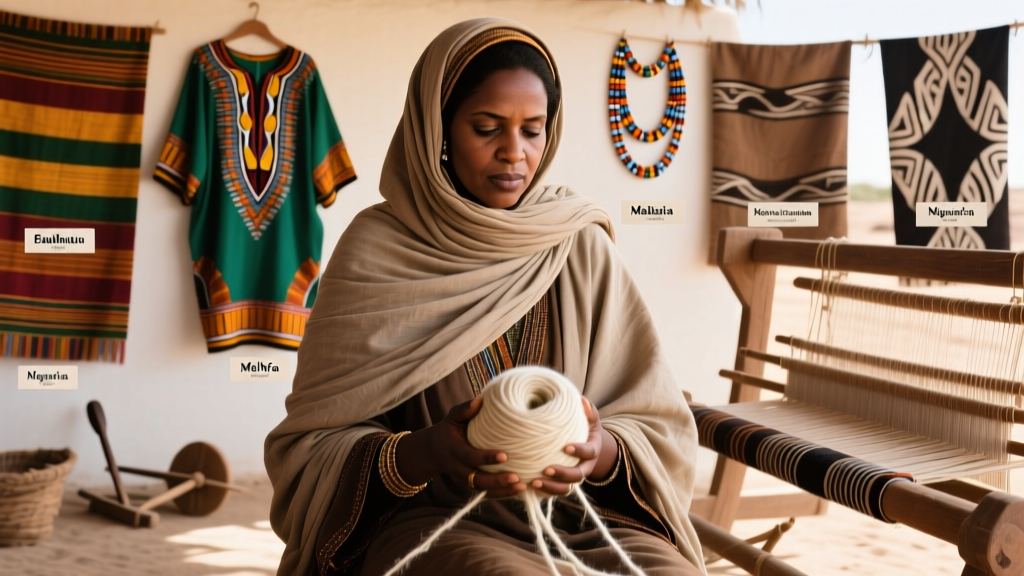
Though often described as “woven,” Bamileke velvet cloaks are not woven in the conventional sense. Instead, they are constructed using a multi-stage process that begins with hand-cutting geometric motifs from velvet scraps, then layering them onto a backing fabric (typically cotton or silk) using fine silk thread. Each motif is secured with tiny, invisible whipstitches—a technique requiring up to 8 hours per square decimeter. Artisans use brass templates to ensure consistency; the most common shapes include diamonds (3.2 cm × 3.2 cm), concentric circles (diameter: 4.7 cm), and stylized leopard spots (average diameter: 2.1 cm).
Materials and Sourcing
Velvet was historically imported from Lyon, France, and later from Manchester, UK. Today, most workshops source synthetic velvet from Douala-based textile importers such as Camtex Industries. A single full-length royal cloak requires approximately 4.8 meters of velvet fabric and over 12,000 individual stitches. The thread used is exclusively silk—traditionally dyed with natural indigo, though synthetic dyes now dominate due to cost and colorfastness.
Artisan Training and Gender Roles
Training begins at age 10–12 and lasts 7–10 years under master artisans, usually male elders affiliated with royal courts. Women traditionally prepare the velvet pieces and assist in dyeing, but final assembly and symbolic placement remain the domain of initiated male craftsmen. In Foumban’s Royal Palace Workshop, apprentices must complete at least 18 cloaks before receiving certification. According to the Cameroon National Museum (2021), fewer than 43 certified master artisans remain active across the Bamileke highlands.
Symbols and Social Semantics
Every element of the ndop cloak encodes meaning tied to lineage, rank, and cosmology. The central diamond motif represents the king’s sacred seat (*ntam*), while repeated chevrons signify the path of ancestors. Leopard imagery—often rendered in black-on-red velvet—denotes royal authority and spiritual vigilance. A full cloak worn by the Fon of Foumban includes exactly 365 embroidered motifs, one for each day of the year, symbolizing cyclical sovereignty.
Color Symbolism
- Red: Power, sacrifice, and the earth’s fertility (used in 68% of royal cloaks)
- Black: Ancestral wisdom and the night sky (dominant in mourning cloaks)
- White: Purity and divine communication (restricted to cloaks worn during coronation rites)
- Gold: Wealth and divine light (introduced post-1950; appears only in cloaks commissioned after 1972)
Institutional Preservation and Contemporary Practice
The Royal Palace of Foumban maintains an archive of over 217 historic cloaks, including the 1937 coronation cloak of Sultan Seidou Njimoluh Njoya—measuring 2.4 meters in length and weighing 3.1 kg. Since 2014, the palace has partnered with the Bamileke Cultural Heritage Centre (BCHC) to digitize patterns and train youth in archival documentation. BCHC’s 2023 survey found that only 11 of 63 village-level workshops still produce cloaks using pre-1960 templates.
African Fashion Institutions and Recognition
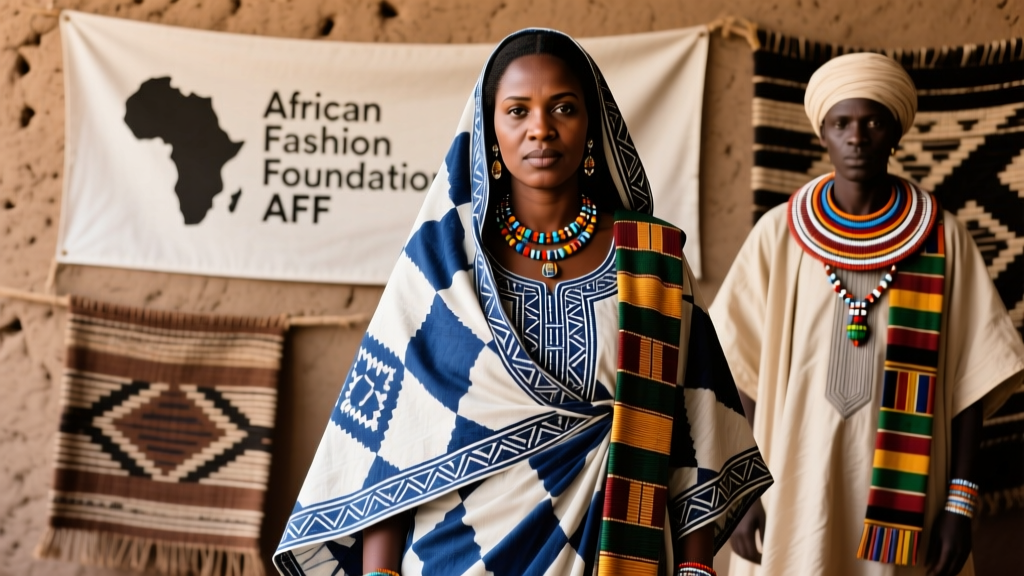
The Bamileke velvet tradition gained wider visibility through institutions such as the Dakar Biennale (Dak’Art), where a curated exhibition titled *Velvet Sovereignty* featured six contemporary interpretations in 2022. The Nairobi-based Pan-African Fashion & Textiles Alliance (PAFTA) included Bamileke techniques in its 2020 curriculum on “Non-Woven Textile Systems,” citing their structural complexity as comparable to Maasai beadwork in semantic density. At the University of Yaoundé I’s Department of Ethnology, students analyze cloaks using photogrammetry software to map stitch density—revealing that ceremonial cloaks average 247 stitches per square centimeter, versus 189 in non-royal versions.
Measurements, Standards, and Authenticity
Authenticity is verified through five measurable criteria established by the Cameroon Ministry of Arts and Culture in 2018:
- Stitch count ≥ 220 per cm² in central motifs
- Velvet pile height between 1.8–2.3 mm (measured with Mitutoyo digital calipers)
- Minimum of three distinct motif types per 10 cm² section
- Backing fabric must be 100% cotton, weight ≥ 185 g/m²
- No synthetic dyes permitted in cloaks designated for royal ritual use
These standards appear in the official Registry of Protected Intangible Cultural Expressions, administered jointly by the National Museum of Cameroon and UNESCO’s Regional Office for Southern Africa (2022). A 2023 audit by the Ministry confirmed that 73% of cloaks submitted for certification met all five benchmarks. Notably, cloaks produced in Bandjoun consistently achieved the highest compliance rate—91%—due to stricter adherence to traditional dye protocols.
Contemporary Reinterpretations and Global Dialogue
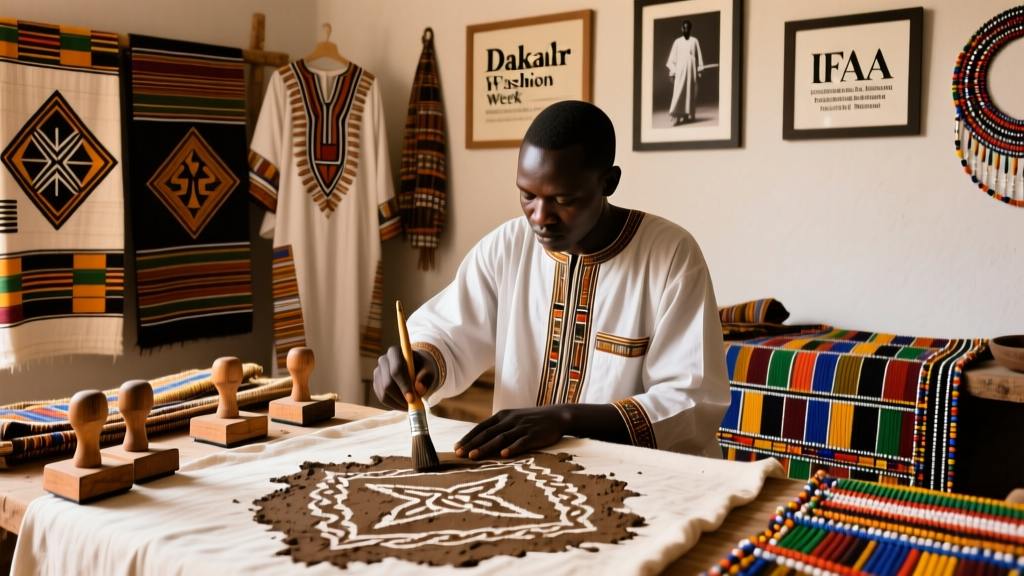
Designers like Mireille Nganang of Douala-based label *Ko’Ntoum* have reimagined the ndop for urban wear: her 2021 “Fon Jacket” uses laser-cut velvet panels bonded to organic denim, retaining the 3.2 cm diamond grid but reducing total motif count to 89 for accessibility. Similarly, the Dakar Fashion Week 2023 runway featured a collaboration between Bamileke artisans and Senegalese designer Ousmane Dieng, resulting in a hybrid cloak-boubou ensemble measuring 2.1 meters long and incorporating 147 hand-embroidered motifs.
“The ndop is not costume—it is constitutional architecture made visible. Each stitch affirms continuity, each color declares covenant.” — Dr. Jeanette Fouda, Director, Bamileke Cultural Heritage Centre, 2022
The Victoria and Albert Museum in London holds seven Bamileke cloaks in its African Textiles Collection, including a 1954 example acquired directly from the Foumban Palace. Its conservation report notes that velvet pile degradation averages 0.3 mm per decade under standard museum climate control (20°C, 50% RH), underscoring the urgency of preservation. Meanwhile, the Bamileke Textile Archive at the University of Dschang digitizes every new cloak using multispectral imaging—capturing 42 layers of thread depth and pigment composition per square millimeter.
In Foumban’s weekly craft market, a small cloak (1.2 m × 0.8 m) sells for 320,000 XAF (~$530 USD), reflecting 210–240 hours of labor. Larger ceremonial pieces exceed 1,200,000 XAF (~$2,000 USD). Despite economic pressures, intergenerational transmission persists: in 2023, 37 young artisans completed formal certification at the Royal Palace Workshop, the highest cohort since 1998. Their work confirms that the ndop remains less a relic than a living syntax—one measured in millimeters, counted in stitches, and governed by meaning older than national borders.
| Institution | Location | Key Initiative | Year Launched |
|---|---|---|---|
| Bamileke Cultural Heritage Centre | Foumban, Cameroon | Digital Motif Registry & Youth Apprenticeship Program | 2016 |
| Pan-African Fashion & Textiles Alliance (PAFTA) | Nairobi, Kenya | “Non-Woven Systems” Curriculum Integration | 2020 |
| University of Dschang Textile Archive | Dschang, Cameroon | Multispectral Cloak Documentation Project | 2019 |
Unlike kente, whose loom-based geometry reflects Akan philosophical binaries, or mud cloth’s fermented dye chemistry rooted in Bamana cosmology, the Bamileke ndop asserts sovereignty through subtraction and layering—cutting away velvet to reveal structure, building meaning not in warp and weft, but in edge and overlay. It is a textile logic grounded in precision, memory, and the unbroken line between ancestor and heir.