Bogolanfini: Malian Mud Dye Art
Cloth Born from Earth and Leaf
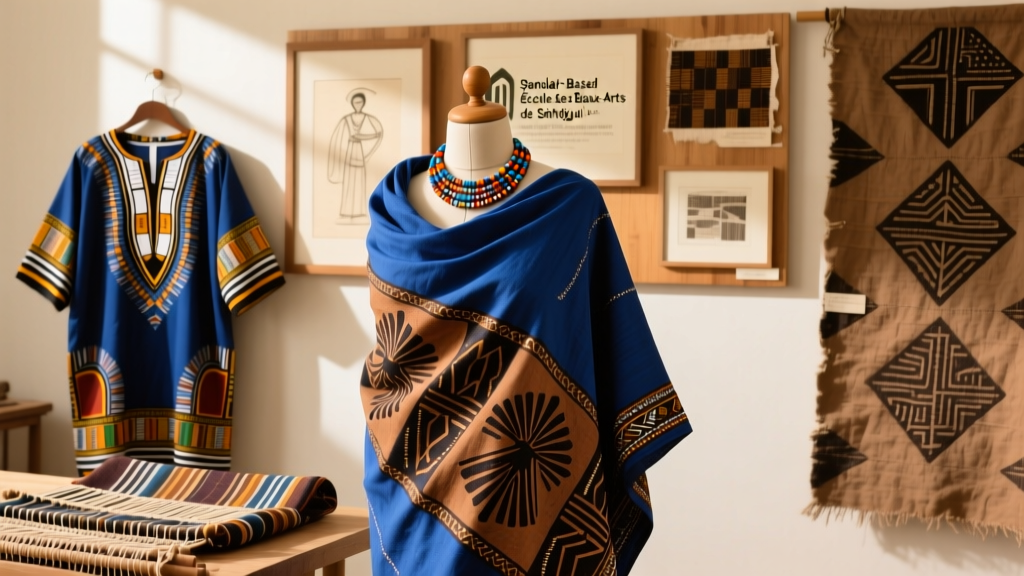
Bogolanfini (bogolan or mud cloth) is a handmade cotton fabric from Mali dyed with fermented mud and plant-based mordants. The name derives from Bambara words bogolan (made with mud) and fini (cloth). Unlike most dyeing processes, bogolan uses a resist-and-react technique where plant tannins react with iron-rich fermented mud to create deep, permanent black and brown tones.
The Dyeing Process
Production begins with narrow-strip cotton cloth woven by men. The cloth is soaked in yellow dye from boiled n'gallama tree leaves. The artisan then paints designs using fermented mud collected from riverbeds and aged up to a year. The mud reacts with tannin-soaked cloth to create permanent black patterns. The yellow background is then bleached white using a solution of ground peanuts and caustic soda, except where yellow is preserved as design.
- Strip weaving: narrow cotton strips sewn together
- Tannin bath: leaf soak creates yellow base
- Mud painting: fermented iron-rich mud creates black
- Bleaching: selective removal creates white areas
Symbolic Pattern Language
Bogolan patterns encode specific messages and protective symbols. Fish bones represent fertility, concentric circles represent the world and its cycles, zigzag lines represent the path of life, and abstract animal forms provide spiritual protection. Hunters wore bogolan for camouflage from supernatural threats, and specific patterns were reserved for women during transitional life stages.
Global Recognition
Bogolan gained international attention in the 1980s through Malian designer Chris Seydou. Today it is Mali's most recognized cultural export. Master dyers in the Beledougou region continue the full, time-intensive technique that makes authentic bogolan a unique achievement of West African textile chemistry.